130–400 kg·cm Servo Motors
High-torque servo motors rated 130 kg·cm and above (12.7 N·m and up) drive the heavy joints: industrial arm shoulders, AGV drive wheels, quadruped hips and CNC positioning axes. Above 400 kg·cm (39.2 N·m) they replace hydraulic and pneumatic cylinders in heavy automation, delivering precise position and force control without oil, seals or fluid maintenance.
What fits in this torque range
Industrial robot arm shoulder and elbow joints
AGV, forklift and port equipment drive axes
Humanoid and heavy quadruped hip and knee actuators
Excavator attachment retrofits and aerospace ground equipment
CNC rotary axes, indexing tables and load test stands
Torque reference
130 kg·cm
12.7 N·m
250 kg·cm
24.5 N·m
400 kg·cm
39.2 N·m
600 kg·cm
58.8 N·m
1,000 kg·cm
98.1 N·m
Typical payload
10–100 kg, depending on arm length
Specify the whole axis, not just the motor
Ask for continuous torque at a stated ambient temperature, brake holding torque, encoder resolution after gearing, and the peak current the driver must supply. A 300 kg·cm motor paired with an undersized driver will trip on acceleration long before it reaches its rated torque.
Servo or hydraulic?
Electro-mechanical wins where you need repeatable position, quiet operation and no fluid maintenance. Hydraulics still win on power density for continuous shock loads. The decision usually comes down to duty cycle: intermittent precise motion favours a servo, continuous high-force abuse favours hydraulics.
FAQ
Why does my servo overheat at rated torque?
Because rated torque is usually a short-duration figure. Duty cycle, ambient temperature and mounting heat-sinking decide the real continuous limit — derate 20–30% inside an enclosed housing.
Is 48 V enough for this torque class?
For 130–250 kg·cm at moderate speed, yes. Above that, 72 V reduces current and copper losses for the same output, provided your driver and safety circuit are rated for it.
How do I size a 130 kg·cm servo for a lifting axis?
Required torque = load (kg) × 9.81 × arm length (m) × safety factor, then divide by 0.0981 to convert N·m into kg·cm. Add brake holding torque and acceleration torque on top of that figure.
Showing 1–12 of 22 results
-
130–400 kg·cm Servo Motors
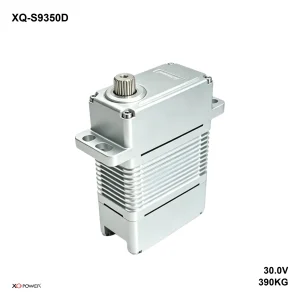
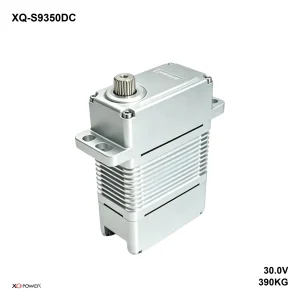
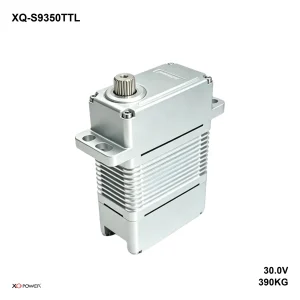
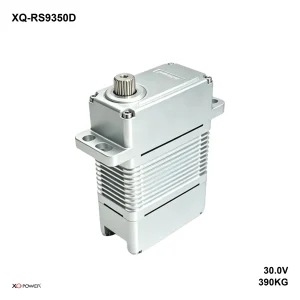
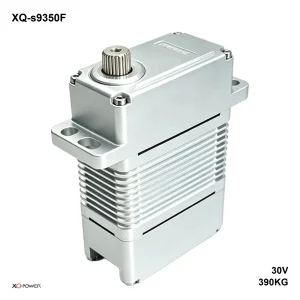
XQ-S9350F 390kg (38.2 N·m) 30V High-Torque Brushless Industrial Servo
Read more -
130–400 kg·cm Servo Motors
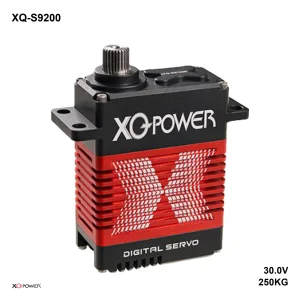
Industrial Brushless Servo S9200D 250kg (24.5 N·m) 30V 405g PWM
Read more -
130–400 kg·cm Servo Motors
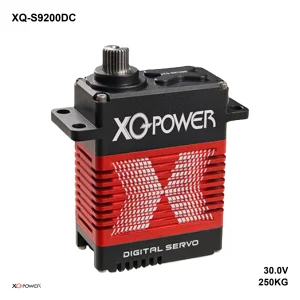
Industrial Brushless Servo S9200DC 250kg (24.5 N·m) 30V 405g CAN
Read more -
130–400 kg·cm Servo Motors
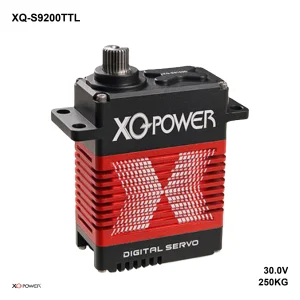
Industrial Brushless Servo S9200TTL 250kg (24.5 N·m) 30V 405g TTL
Read more -
130–400 kg·cm Servo Motors
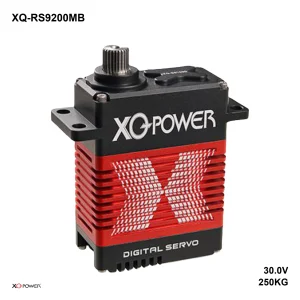
Industrial Brushless Servo RS9200MB 250kg (24.5 N·m) 30V 405g Modbus
Read more