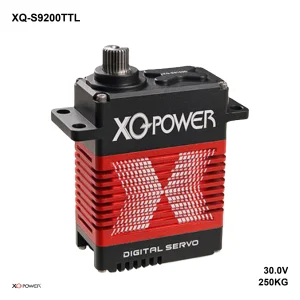
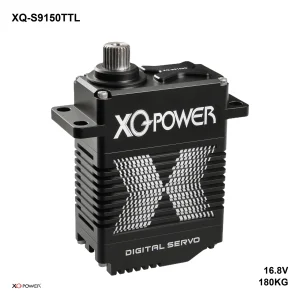
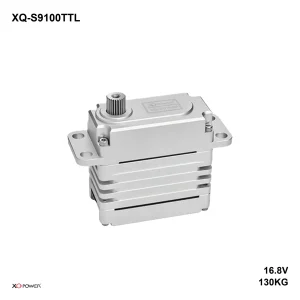
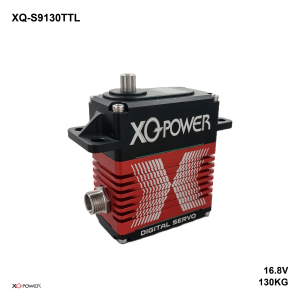
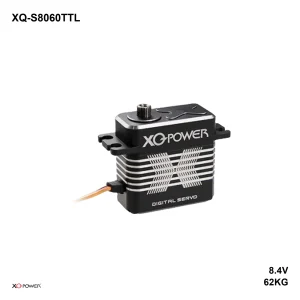
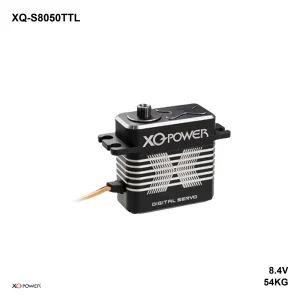
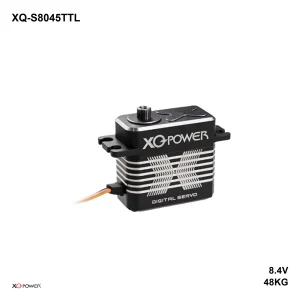
TTL Serial Servo Motors
TTL serial servo motors are daisy-chained actuators that use a single-wire half-duplex TTL UART link for both commands and feedback. Each servo has its own ID, so one 3-pin connector can drive and read an entire limb — position, load, voltage and temperature for every joint.
Where TTL serial servos fit
- Quadruped and humanoid robot platforms
- Multi-axis desktop arms and grippers
- Research rigs, animatronics and stage motion
- Education and rapid prototyping
Typical TTL serial specifications
| Interface | Half-duplex TTL UART, single data wire plus V+ and GND |
| Baud rate | 0.5–1 Mbps typical |
| IDs | 0–253, assignable in software |
| Feedback | Position, load, input voltage, temperature, moving status |
| Torque range | 5–80 kg·cm (0.5–7.8 N·m) |
| Supply voltage | 6–24 V DC; separate servo power rail recommended |
TTL serial vs RS-485
TTL serial is board-level: 3.3–5 V logic, short hops, cheap 3-pin cables, every servo in the chain addressable. RS-485 is differential and survives long runs and factory noise. If the controller sits within a metre of the joint, TTL is simpler to wire; if the cable crosses a machine, use RS-485 or CAN.
FAQ
Can I mix TTL servos from different brands?
Usually not. The connector looks similar but the packet format and register layout differ, so protocol-compatible servos must come from the same family.
How do I power a long TTL chain?
Feed power at both ends and keep the data wire short. Voltage drop, not the protocol, is the usual cause of dropouts on chains of twelve or more servos.
Related: RS-485 / Modbus servo motors · 20–60 kg·cm servos
Showing 1–12 of 21 results
-
130+ kg·cm Servo Motors
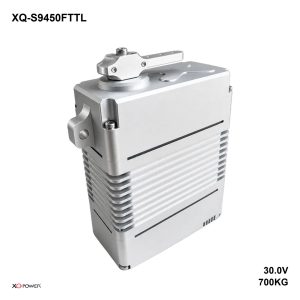
Side-Mount Brushless Servo S9450FTTL 700kg (68.6 N·m) 30V 895g TTL
Read more -
130–400 kg·cm Servo Motors
Industrial Brushless Servo S9200TTL 250kg (24.5 N·m) 30V 405g TTL
Read more