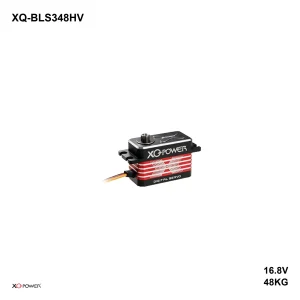
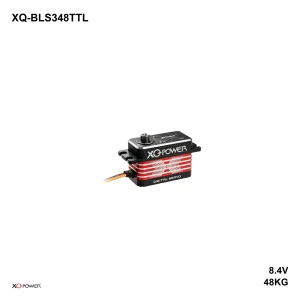
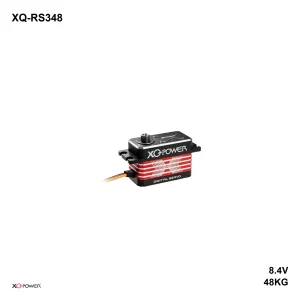
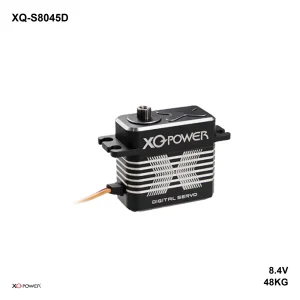
20–60 kg·cm Servo Motors
Servo motors between 20 and 60 kg·cm (2.0–5.9 N·m) cover the middle of light robotics: desktop arms, small AGV steering, camera payloads and educational humanoids. This is the most common band for a first multi-axis machine, because it is strong enough to lift a real payload and small enough to run from a 12–24 V supply.
What fits in this torque range
- 4 to 6 axis desktop robot arms
- Small AGV and AMR steering axes
- Pan-tilt heads carrying 1–3 kg cameras or sensors
- Educational humanoids and exoskeleton prototypes
Torque reference
| 20 kg·cm | 2.0 N·m |
| 40 kg·cm | 3.9 N·m |
| 60 kg·cm | 5.9 N·m |
| Typical payload | 1–3 kg on a 10 cm arm |
Choosing inside this range
Two numbers separate a good 40 kg·cm servo from a bad one: backlash and continuous versus peak torque. A geared servo rated at 60 kg·cm peak may only hold 30 kg·cm continuously without overheating. Ask for both figures, and for the duty cycle they assume.
FAQ
Should I pick 30 kg·cm or 60 kg·cm?
Compute the static load first (payload × arm length), then add 50% for dynamics and safety. If the result lands between two sizes, take the larger one — torque margin buys acceleration and thermal headroom.
Does gear ratio affect precision?
Yes. Higher reduction multiplies torque but adds backlash. For positioning work below 0.5°, ask for the backlash figure in arc-minutes before choosing a high-ratio gearbox.
Related: ≤20 kg·cm servos · 60–130 kg·cm servos
Showing 1–12 of 39 results
-
20–60 kg·cm Servo Motors
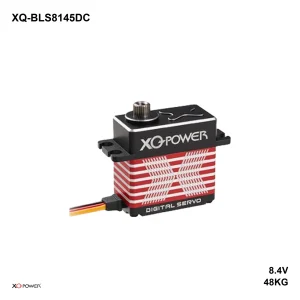
High Torque Brushless Servo BLS8145DC 48kg (4.7 N·m) 8.4V 73g CAN
Read more -
20–60 kg·cm Servo Motors
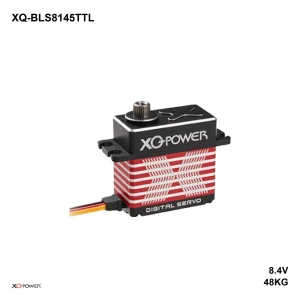
High Torque Brushless Servo BLS8145TTL 48kg (4.7 N·m) 8.4V 73g TTL
Read more