
Servo Heat Dissipation: How XQ-Power Designs for Cooler, Longer-Lasting Torque
Why Servo Heat Dissipation Decides Reliability, Not Just Comfort Most servo discussions focus on torque and speed. In practice, the […]
Heat dissipation, high and low temperature limits, IP67/IP68 sealing, saltwater and high-altitude performance for servos in harsh environments.
Why Servo Heat Dissipation Decides Reliability, Not Just Comfort Most servo discussions focus on torque and speed. In practice, the […]
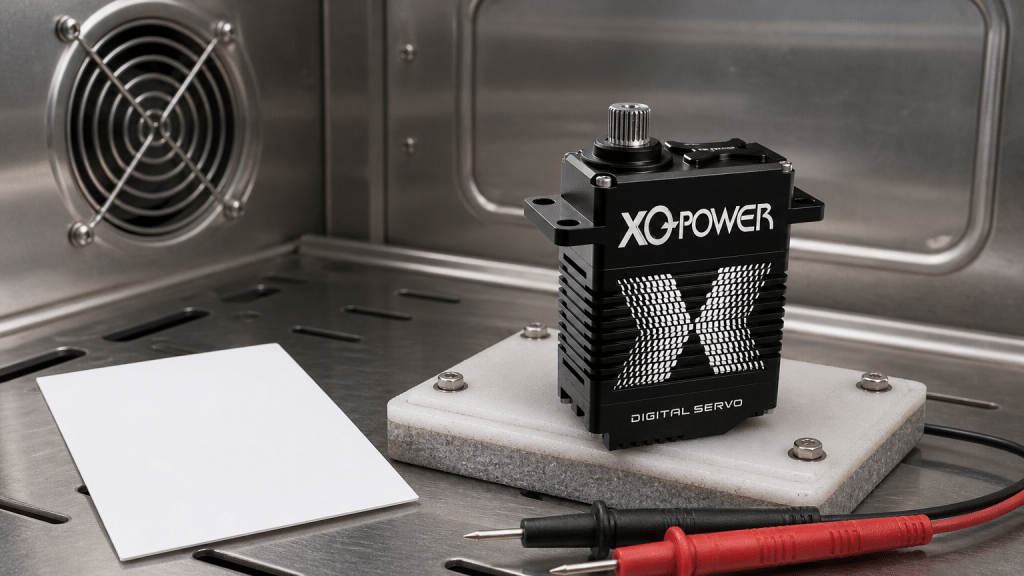
Yes, it can. At low temperature, lubricant viscosity may increase, gear and bearing resistance may rise, and the driven mechanism
Direct answer: XQ-POWER brushless servos can offer a stronger thermal-control foundation for repeated high-load operation because a brushless motor removes
Direct answer: Yes. A dynamic seal around a rotating servo output shaft is a friction interface, so long-term high-frequency motion
Direct answer: Yes, prolonged direct sunlight and high heat can accelerate aging of servo cable jackets, plastic parts, seals, lubricants,
High-Altitude Sealing Reliability: Will Low Pressure Cause Servo Seal Failure? For engineers developing high-altitude UAVs, stratospheric balloons, or high-thrust aerospace
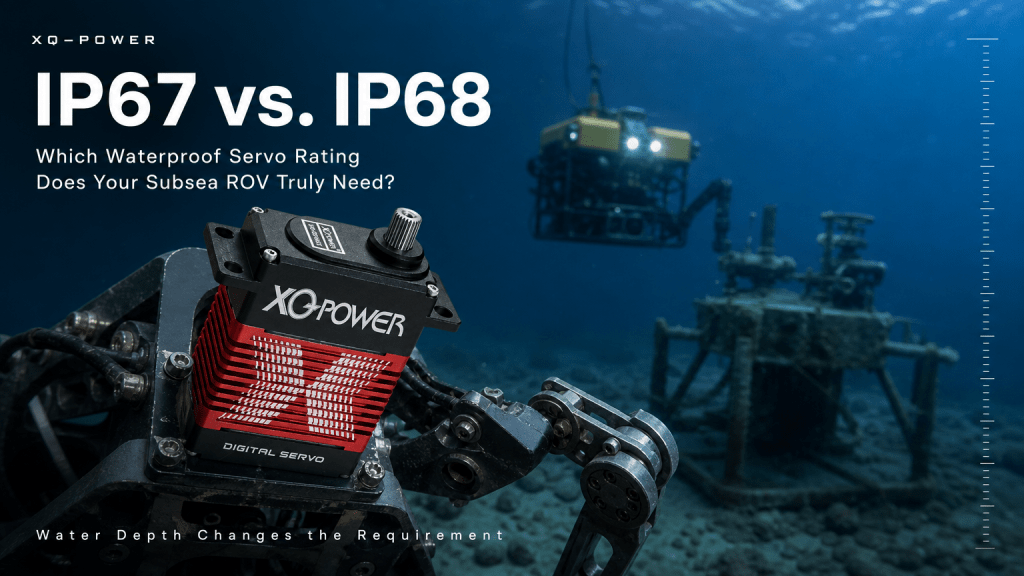
In the world of marine engineering and underwater robotics, the difference between a successful mission and a total equipment failure
In the specialized field of marine engineering and underwater robotics, the environment is the ultimate adversary. For a Subsea ROV (Remotely
Underwater Servo Hydrostatic Pressure — What Depth Demands Underwater servo hydrostatic pressure is the challenge no terrestrial actuator ever faces.
Servo Motor Thermal Management: Why Your Servo Dies Young in Continuous Duty Servo motor thermal management is the difference between