
A PTZ camera servo faces a problem that most motion control applications never deal with: wind. A security integrator in Dubai mounted eight long-range cameras on a coastal site last year and lost three pan axes within six months. The units had enough speed and torque on paper. But their holding torque could not fight the constant 30 km/h crosswind. The gears wore down to slop in months instead of years.
Picking the wrong pan-tilt actuator costs more than a replacement unit. It costs the footage you miss when the camera drifts off target at the worst possible moment. Here is what actually separates an industrial gimbal servo from the rest.
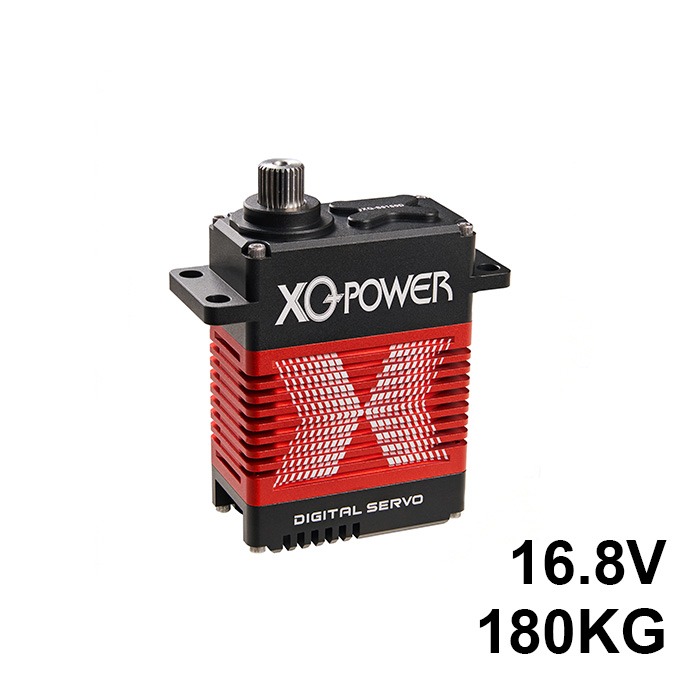
What Makes Industrial Pan-Tilt Servos Different from Hobby Gimbals
A hobby gimbal moves a GoPro for five minutes at a time and sits in a drawer the rest of the week. An industrial surveillance unit runs 24 hours a day, 365 days a year, often on a pole in direct sun or freezing rain. The duty cycle difference alone eliminates most off-the-shelf options.
Beyond durability, these applications demand smooth motion at very low speeds. A security camera tracking a person at 200 meters needs sub-degree positioning resolution. A half-degree jump at the motor translates to several meters of error at that distance. Hobby servos with a 3-4 µs deadband simply cannot resolve movements that fine. You need a proper PTZ camera servo with 1 µs or tighter deadband to hold a usable track.
Key PTZ Camera Servo Specs That Actually Matter
Deadband is the first number to check. A 1 µs deadband gives roughly 2000 discrete positions across the full PWM range. For thermal cameras or license plate recognition systems, this is the bare minimum.
Next, look at the gear train material. A pan axis that sweeps continuously wears the first reduction stage faster than anything else in the system. Steel gears handle this kind of duty cycle. Brass wears out. Titanium saves weight, and that matters when the entire gimbal assembly hangs off a pole arm. All three materials show up in the industrial pan-tilt market, but only steel survives long enough to justify the install cost.
Holding torque also deserves close attention. The camera housing acts like a sail in wind, and the motor must resist that load without overheating. A unit rated at 100 kg·cm stall might hold a 30 kg·cm wind load indefinitely, but only if the thermal design allows it. This specification rarely appears on a one-page datasheet, so you have to ask.
Why Holding Torque Outweighs Speed in Surveillance Applications
Most integrators fixate on the 0.08 sec/60° speed spec. For a pan-tilt camera system, that number is almost irrelevant. Nobody needs the camera to whip from 0 to 180 degrees in a quarter second. They need it to stay locked on a target in gusting wind without overshooting.
The number that actually matters is how much torque the unit can hold at a fixed position without the motor current climbing into thermal shutdown. This data lives in the test report or the thermal characterization file. Ask for it. If the manufacturer looks confused by the question, keep looking.
On the tilt axis, the load is asymmetric. The camera mass sits above the pivot, so the motor constantly fights gravity. A tilt actuator needs enough continuous torque to hold the assembly level while the pan axis sweeps. And it needs to do it without developing gear lash over time. This double-axis requirement weeds out most general-purpose options immediately.