
“Standard-size servos wouldn’t fit inside the wing profile of our fixed-wing mapping drone. The thickness was off by 8 millimeters — sounded trivial until we realized it meant redesigning the entire wing rib structure. A low profile servo solved it in one afternoon.”
— Lars Bergström, Airframe Engineer, Nordic Geospatial UAV
When Thickness Is the Real Constraint
Most servo selection guides obsess over torque, speed, and voltage. They should. But in a surprising number of applications, the limiting factor is physical thickness — the distance between the mounting flange and the top of the case. If the servo is 2 millimeters too thick for the space inside a robotic finger joint or a drone wing pocket, the torque rating on the datasheet doesn’t matter. It simply won’t fit.
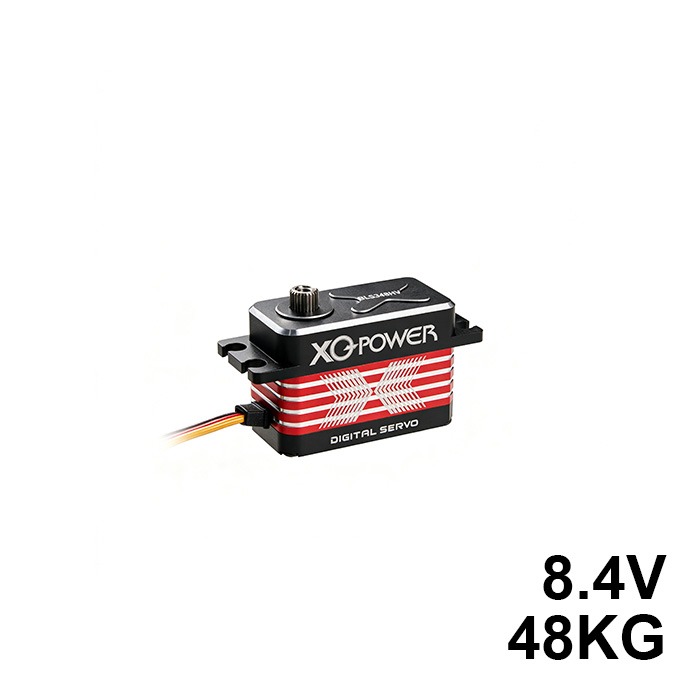
A low profile servo trades case height for lateral spread. Same internal components — motor, gear train, potentiometer or encoder — but arranged flat instead of stacked. The result is a unit that’s 30-50% thinner than a standard servo at equivalent torque, at the cost of a slightly wider footprint.
Three Applications Where Slim Form Factors Win
UAV wings and control surfaces are the obvious case. Fixed-wing drones have thin airfoil sections, and burying a standard 28 mm thick servo inside a 19 mm thick wing means either a bulge in the aerodynamic surface or a housing that eats into the payload bay. Low profile servos in the 15-18 mm range mount flush against the spar without disrupting airflow.
Robotic grippers and end effectors are the second. A multi-finger gripper with three actuated joints per finger packs nine servos into something the size of a human hand. Standard units stack too tall to fit that density. Low profile variants let you squeeze more actuation points into the same volume without sacrificing grip strength.
Then there’s medical and lab automation. Pipetting robots, microplate handlers, and surgical tool positioners all operate in tightly packed enclosures designed around the actuator envelope. When a standard servo won’t fit, a low profile replacement often slides in without forcing the mechanical team back to the CAD model.
What You Give Up
Going low profile isn’t free. Torque density drops because the gear train can’t stack as deep, and the wider footprint demands a broader mounting surface. If your torque headroom is already tight and the envelope has room to spare, stick with standard form factors.
For XQ-Power’s low profile servo series, the design target is simple: 80-90% of the torque from a standard unit in the same motor class, delivered at half the thickness. Drone integrators and gripper designers rarely push torque to the limit anyway — the space constraint hits first.