
“Standard 180-degree servos couldn’t drive the cable drum on our underwater ROV’s manipulator arm. We needed three full turns to spool enough cable to open and close the gripper. A multi-turn servo with position feedback on every rotation solved it without adding a gearbox.”
— Henrik Solberg, ROV Systems Engineer, DeepOcean Subsea
Why 180 Degrees Isn’t Enough
Most servos lock you into a 90 or 180 degree arc. For steering linkages and flight surfaces, that’s fine. But some applications need multiple full turns. And they still need to know exactly where they are. A standard servo can’t do this. Its internal potentiometer hits a mechanical stop and that’s it.
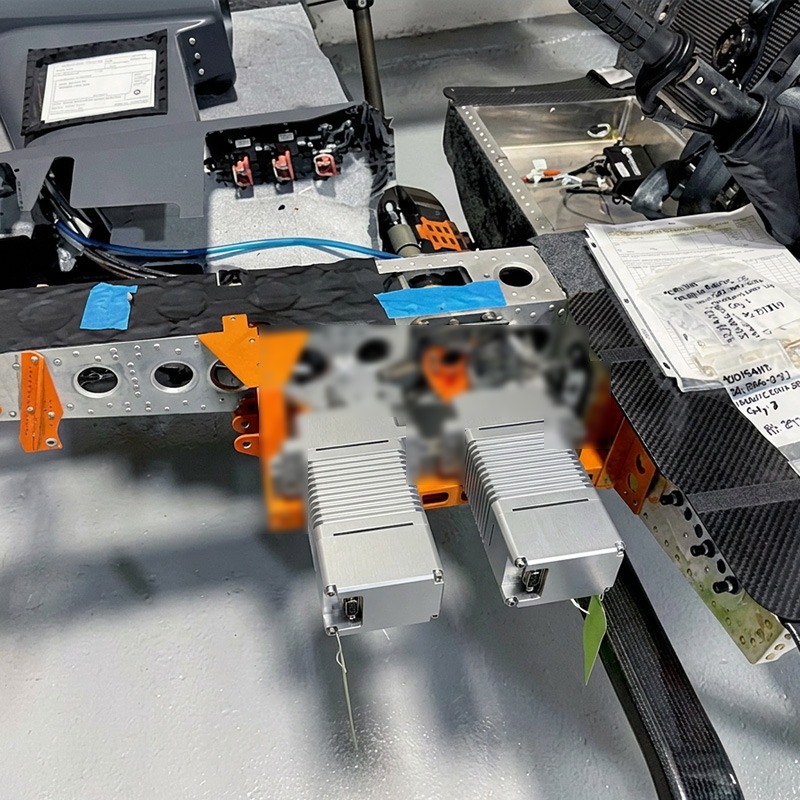
A multi-turn servo swaps the potentiometer for a magnetic encoder. This tracks position across several full rotations — usually 3 to 10 turns. The control loop stays closed the whole time. So you get the same precision as a standard servo. But the range is far wider.
Where Multi-Turn Solves Real Problems
Cable-driven mechanisms are the classic case. A subsea gripper opens and closes by winding cable around a drum. That drum needs 2-4 full rotations to pay out enough line. A standard servo plus an external gearbox works, but it adds backlash and bulk. A multi-turn servo drives the drum directly. Fewer parts, less slop, tighter package.
Lead screw actuators in lab automation are another example. A pipetting robot’s Z-axis moves a plunger through several millimeters of travel. That might take 5-8 full turns on the threaded rod. Instead of a stepper motor plus driver plus limit switch, you get one unit. It handles position control and feedback natively.
Then there are pan-tilt inspection cameras. A 180-degree servo can’t do a continuous sweep. However, a multi-turn unit rotates the camera through 720 degrees. And it never loses track of where it’s pointing. No mechanical stops, no reset to center between scans.
The Spec You Actually Need to Check
Torque and speed look the same on paper. So people skip right past them. The real spec is encoder resolution across the full rotation range. A 3-turn servo at 12-bit resolution gives you about 1.3 positions per degree. That’s sufficient for a cable drum. But if you need sub-degree precision across 5 turns, look for 14-bit absolute encoders. Otherwise resolution drops proportionally with turn count.
XQ-Power’s multi-turn servo range covers standard industrial loads up to heavy automation. Turn limits are configurable through the same USB programmer the standard digital series uses. Set the rotation window, save the fail-safe position, and the servo treats 3 turns as confidently as a standard unit treats 90 degrees.
Related: Programmable Digital Servo: Tune in Software