
In modern industrial facilities, a valve automation servo plays a critical role in maintaining accurate flow control, pressure regulation, and process stability. Whether operating in chemical plants, water treatment facilities, power stations, or oil and gas installations, servo-driven valve systems help ensure that process parameters remain within strict operating limits. As industrial automation continues to advance, engineers are placing greater emphasis on precise actuation, reliable feedback, and long-term operational consistency.
Why Valve Automation Servo Systems Matter in Modern Industry
Industrial processes rely heavily on accurate valve positioning. Without reliable actuation, even small deviations can affect production efficiency, energy consumption, and product quality.
For example, automated valve systems are commonly used in:
- Oil and gas processing
- Water treatment facilities
- Chemical manufacturing
- Power generation plants
- Food and beverage production
As a result, valve automation has become a fundamental component of modern industrial control strategies.
Furthermore, automated systems reduce manual intervention, improve safety, and support continuous plant operation. Consequently, engineers are increasingly evaluating servo technology as a key factor in overall system performance.
For additional information about industrial automation standards, engineers often reference the International Society of Automation (ISA).
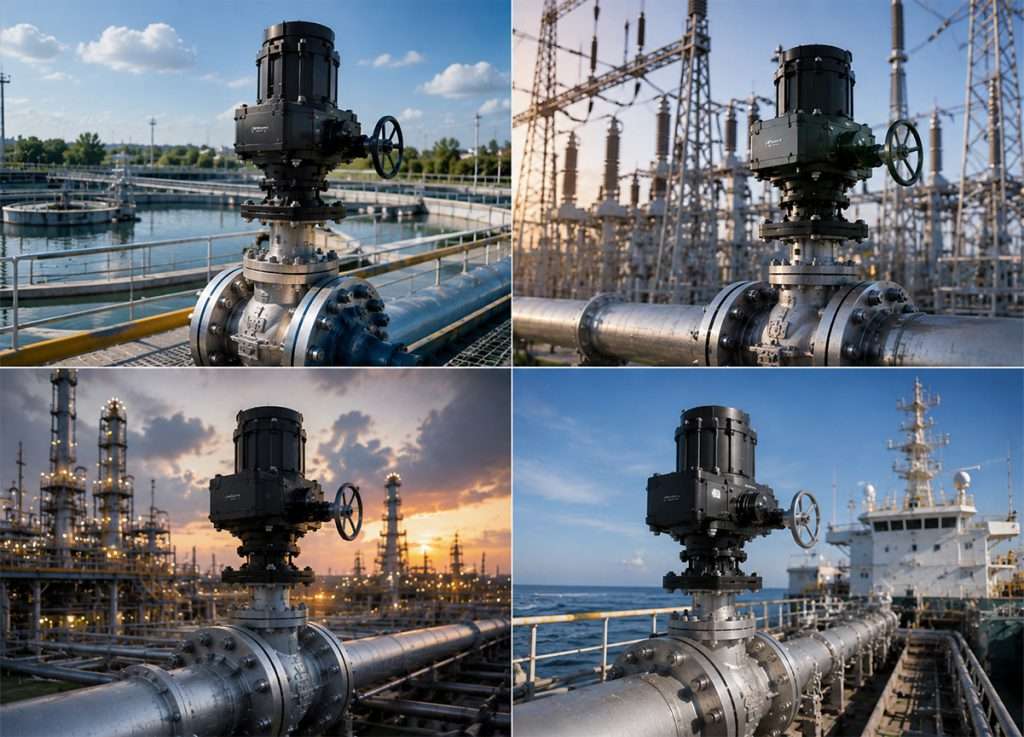
How a Valve Automation Servo Improves Process Control
Unlike simple on-off actuators, a valve automation servo provides precise positioning through closed-loop control.
The servo continuously receives commands from the control system while simultaneously monitoring actual valve position. Therefore, any deviation can be corrected immediately.
Key advantages include:
- Precise valve positioning
- Improved process stability
- Reduced overshoot
- Faster response times
- Better repeatability
In addition, servo-based systems can adapt more effectively to changing operating conditions than conventional actuators.
Why Position Accuracy Is Critical in Valve Automation Servo Applications
Position accuracy directly influences process performance.
For instance, a control valve commanded to open 40% may actually reach 43% if positioning errors exist. Although the difference appears small, it can significantly affect flow rates, pressure levels, and process efficiency.
As a result, the control system may repeatedly compensate for the error, creating unnecessary oscillations and increasing wear on equipment.
Moreover, inaccurate positioning can lead to:
- Product quality variations
- Increased energy usage
- Unstable process conditions
- Higher maintenance costs
Therefore, maintaining precise position feedback is essential for modern industrial operations.
Magnetic Encoder Technology in Valve Automation Servo Systems
One of the most important developments in industrial servo technology is the adoption of magnetic encoders.
Traditional potentiometer-based feedback systems rely on mechanical contact. Over time, wear can reduce accuracy and consistency.
By comparison, magnetic encoders offer several significant advantages.
Non-Contact Position Feedback
Because there is no physical contact between sensing components, mechanical wear is greatly reduced.
Consequently, long-term positioning accuracy remains more stable throughout the service life of the servo.
Improved Repeatability
Consistent feedback enables more predictable valve movement.
As a result, process control systems can achieve greater stability and improved performance.
Better Resistance to Industrial Vibration
Industrial environments often expose equipment to constant vibration.
However, magnetic encoder systems generally maintain reliable operation under these conditions, making them well suited for valve automation applications.
Reduced Maintenance Requirements
Since wear-related issues are minimized, maintenance intervals can often be extended.
Therefore, facilities may benefit from lower operating costs and reduced downtime.
Engineers interested in industrial electronics and reliability research frequently consult the IEEE Aerospace and Electronic Systems Society for technical publications and engineering resources.
Common Valve Automation Servo Applications
Servo systems are used across a wide variety of valve control applications.
Ball Valve Automation
Ball valves are widely used for flow isolation and process control.
Servo-driven positioning enables smoother operation and improved control accuracy.
Butterfly Valve Control
Butterfly valves are commonly found in large-diameter piping systems.
Because these valves often regulate substantial flow volumes, accurate servo positioning becomes especially important.
Globe Valve Regulation
Globe valves require precise movement for effective throttling.
Therefore, servo systems are frequently selected when fine flow control is necessary.
Mixing Valve Applications
Mixing valves combine multiple process streams.
Accurate servo positioning helps maintain consistent ratios and improves product quality.
Process Control Valve Systems
Many industrial processes depend on continuously adjusting valve positions.
As a result, high-performance servo systems are often integrated into automated process control architectures.
Environmental Challenges for Valve Automation Servo Systems
Industrial facilities present demanding operating conditions.
Consequently, valve automation servo systems must withstand a variety of environmental challenges.
Vibration and Mechanical Shock
Rotating machinery and process equipment generate continuous vibration.
Therefore, robust gears and reliable feedback systems are essential.
Dust and Contaminants
Dust can accelerate wear and affect mechanical performance.
For this reason, industrial-grade sealing solutions are often required.
Moisture and Corrosive Environments
Many facilities operate in humid or chemically aggressive conditions.
As a result, corrosion-resistant materials play an important role in long-term reliability.
Temperature Variations
Industrial systems may experience significant temperature fluctuations.
Accordingly, servo components must maintain performance across a wide operating range.
Valve Automation Servo Case Study: Improving Position Consistency
A chemical processing facility experienced increasing flow variations in a critical process line.
Initially, engineers suspected issues with the control algorithm. However, further investigation revealed gradual position drift within the valve actuation system.
Because the feedback signal no longer accurately reflected actual valve position, the control system continuously attempted corrective adjustments.
After upgrading to a magnetic encoder-based servo solution, position consistency improved significantly.
As a result:
- Process stability increased
- Maintenance requirements decreased
- Product quality became more consistent
- Control performance improved
This example demonstrates how feedback accuracy can directly influence overall plant performance.
For engineers working in water treatment and flow control industries, the American Water Works Association (AWWA) provides valuable technical resources and industry guidance.
How to Select the Right Valve Automation Servo
When evaluating servo systems for industrial valve control, engineers should consider several important factors.
Valve Automation Servo Torque Requirements
Always ensure sufficient torque margin for operating loads and unexpected process conditions.
Valve Automation Servo Position Accuracy
Evaluate repeatability, resolution, and long-term feedback consistency.
Encoder Technology Selection
Magnetic encoders typically offer advantages in reliability and maintenance reduction.
Communication Interfaces
Modern systems may require:
- RS485
- Modbus
- CAN Bus
- Industrial Ethernet
Reliability and Environmental Protection
Finally, review cycle-life testing, vibration resistance, temperature performance, and environmental protection ratings.
Conclusion
As industrial automation continues to evolve, valve automation servo technology is becoming increasingly important for maintaining process efficiency and operational reliability.
While torque remains a critical specification, engineers must also consider position accuracy, encoder technology, environmental durability, and communication capabilities.
Ultimately, advanced valve automation servo systems equipped with magnetic encoder feedback can help improve process control, reduce maintenance requirements, and support the long-term goals of Industry 4.0 and smart manufacturing initiatives.
Frequently Asked Questions
What is a valve automation servo?
A valve automation servo is a closed-loop actuator system that precisely controls valve position in industrial flow and process control applications.
Why is position feedback important in valve automation?
Position feedback allows the control system to verify valve movement and maintain accurate flow, pressure, and process conditions.
Are magnetic encoders suitable for industrial valve automation?
Yes. Magnetic encoders provide non-contact position sensing, improving long-term reliability and reducing wear compared with traditional feedback methods.
Which communication interfaces are commonly used in valve automation systems?
Common interfaces include RS485, Modbus, CAN Bus, and industrial Ethernet protocols depending on the application requirements.
Powering Innovation
Contact XQ-power’s product specialist to recommend suitable motor or servo for your product.