
Subsea Torque Loss: Why Your ROV Feels “Weak” at 50 Meters
Selecting the right Underwater ROV Motor requires a deep understanding of fluid dynamics and pressure compensation. I saw a fascinating discussion on r/marinebiology recently where a student team was frustrated that their thrusters worked perfectly in the testing tank but felt incredibly ‘weak’ at 50 meters deep. As one offshore specialist pointed out: ‘Water is 800 times denser than air, and it doesn’t care about your bench-test data.’ If you are currently sizing an underwater ROV motor, you can’t just rely on standard air-torque curves; you need to account for the unique physics of the deep ocean.
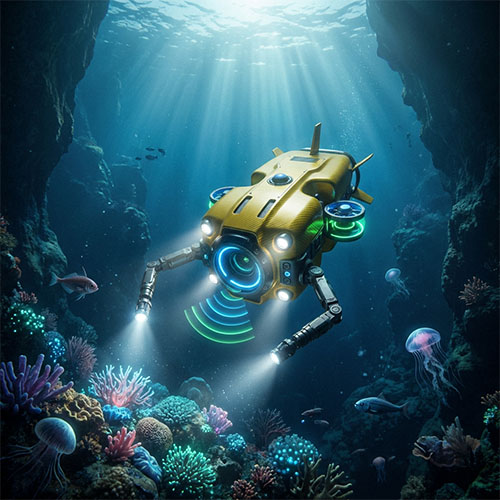
One of the replies from an offshore tech (u/SubseaSpecialist) hit the nail on the head: “Water is 800 times denser than air, and it doesn’t care about your bench-test data.”
If you’re picking an underwater ROV motor, you can’t just look at a standard torque curve. The deep ocean is a completely different physics engine.
The Pressure Compensation Tax
Most people know they need a “waterproof” motor. But in true marine robotics solutions, we don’t just “seal” the motor; we compensate for it. If you use a standard oil-filled housing, that oil becomes more viscous (thicker) under pressure. This creates “Internal Drag.” Your motor might be outputting 50kg of torque, but 10kg of that is being wasted just trying to spin the rotor through thick, pressurized oil.
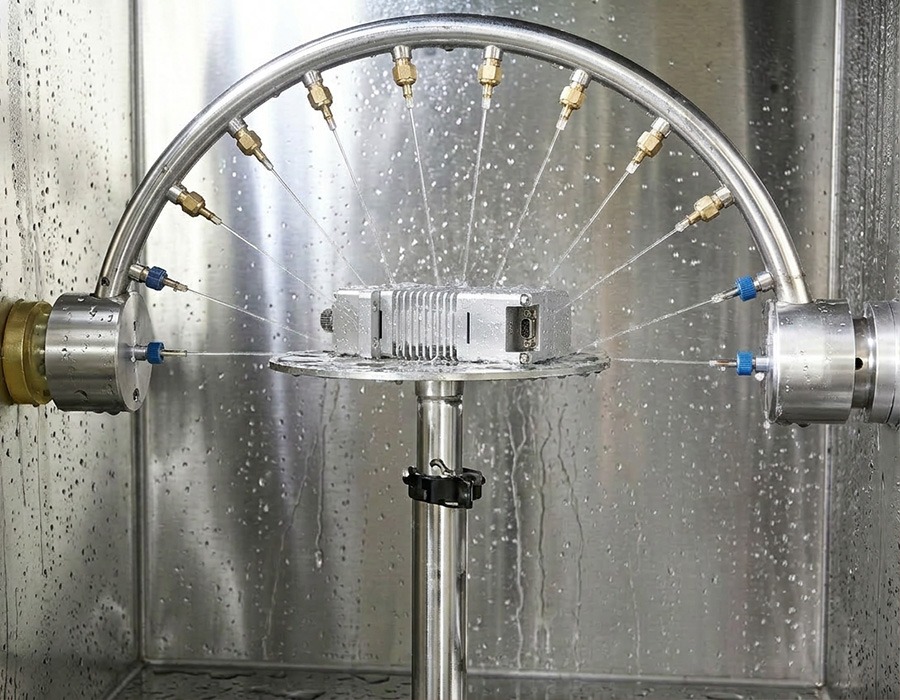
Saltwater Density & Propeller Loading
Saltwater is denser than freshwater. This sounds like a minor detail until you realize, it increases the load on your underwater ROV motor by about 3% right off the bat. Add in the “entrained water mass” (the water that moves with the motor), and your acceleration curves go out the window.
If you haven’t factored in the Drag Coefficient of the motor’s own housing, you’re going to be underpowered. This is why we design our subsea motors with a “Slim-Profile” architecture—to reduce the amount of water the motor has to fight against.
The Cooling Paradox
The ocean is cold, which is great for cooling. However, if your underwater ROV motor is encased in a thick, pressure-resistant shell without proper thermal bridging, the heat has nowhere to go. I’ve seen ROV motors burn out in 4°C water simply because the heat couldn’t escape the housing.
Engineering for the Deep
At XQ-Power, our Marine Robotics Solutions are built with pressure-balanced oil-filled (PBOF) , compatibility and specialized anti-corrosion coatings.
When you’re calculating the thrust for your next ROV project, don’t just use the “In-Air” torque. Ask us for our Subsea Performance Map. We’ve done the math on fluid friction and pressure drag. so your robot doesn’t run out of breath when it matters most.
Curious about the engineering power behind our subsea solutions?
At XQ-Power, we don’t just provide motors; we deliver reliability for the world’s most demanding environments. Visit our
About Us
page to explore our R&D center, manufacturing capabilities, and our commitment to pushing the boundaries of precision motion control.
Powering Innovation
Contact XQ-power’s product specialist to recommend suitable motor or servo for your product.