
RS485 Servo for Industrial AGV: Why Your Control Signal is Glitching
Selecting the right RS485 servo for industrial AGV systems is often a battle against EMI (Electromagnetic Interference). I was reading a thread on r/PLC where an engineer was pulling his hair out:
“Every time our VFD (Variable Frequency Drive) kicks in, our PWM-controlled steering servos go haywire. The robot starts jittering like it’s possessed. Is there a way to shield these hobby-grade signals, or do I need a total overhaul?”
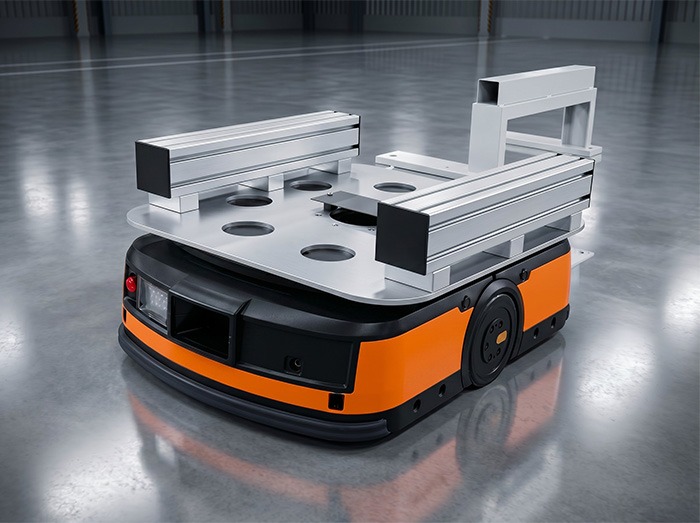
The reality is that PWM (Pulse Width Modulation) is inherently weak in industrial settings. This is where the RS485 servo becomes non-negotiable.
Why RS485 Wins in the Factory:
- Differential Signaling: RS485 uses two wires to send the same signal in opposite polarities. If noise hits the cable, it hits both wires equally, allowing the receiver to cancel it out. This allows for stable cable runs of over 100 meters—impossible with PWM.
- Daisy-Chaining (The 32-Node Rule): You can link up to 32 servos on a single bus. In a complex AGV with multiple lift and steering axes, this reduces your wiring complexity by 70%.
- Real-time Feedback: Unlike “blind” PWM, an RS485 servo for industrial AGV reports its position, temperature, and current load back to the controller at speeds up to 1Mbps.
[The Bottom Line] If you’re building a robot that works near high-voltage motors or VFDs, skip the PWM. The extra cost of an RS485 bus is cheaper than a single collision caused by signal noise.