
IP67 Waterproof Servo Motor: Why “Splash-Proof” Isn’t Enough
Choosing an IP67 waterproof servo motor is tricky because “waterproof” is the most abused word in marketing. On r/RCROV, a user shared a painful lesson:
“Bought a ‘waterproof’ servo for my underwater gripper. It lasted 10 minutes at 0.5m depth before the internal board shorted. Opened it up and found zero O-rings—just a bit of cheap grease around the shaft. Total waste of money.”
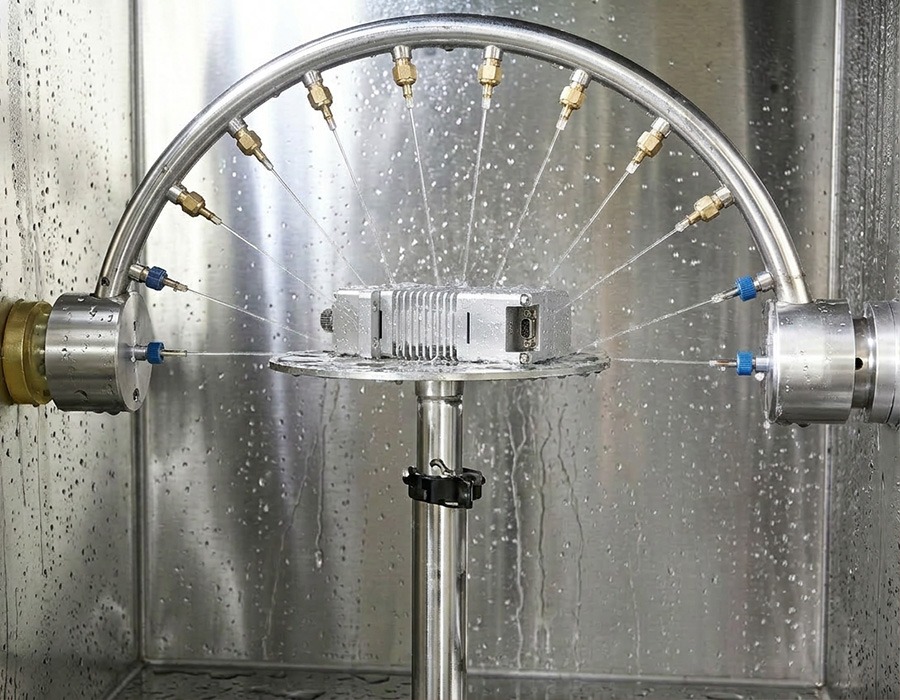
In the B2B world, an IP67 waterproof servo motor must handle submersion in 1 meter of water for 30 minutes. Anything less is just a splash-guard.
The Anatomy of a True IP67 Seal:
- Vacuum-Tested O-Rings: Every joint (top cover, middle case, bottom) must have a high-density rubber O-ring. We pressure-test our units to ensure no air escapes at 2 PSI before shipping.
- Double-Lip Shaft Seals: The output shaft is the weakest point. A professional waterproof servo motor uses a double-lip oil seal to prevent water from wicking in through capillary action during rotation.
- Hydrophobic Coating: The internal PCB should be potted or coated with a military-grade hydrophobic resin. Even if a drop of condensation forms due to temperature shifts, the electronics remain dry.
[Case Study: The Outdoor AGV] A client’s delivery robots were failing during heavy rainstorms. They switched to our IP67 rated series, and after 400 hours of outdoor exposure in tropical humidity, the internal humidity sensors still read 0%. That is the reliability you pay for.