
A High Power Density Servo is the only way to build a high-performance robotic limb without ending up with a bulky, heavy mess. “We had to fit a 50kg-cm actuator into a space the size of a matchbox,” a medical robotics designer told us during a prototyping session. This is the core challenge of modern robotics. You need massive torque, but you have zero room for a large motor.
The Science of More Power in Less Space
To achieve a true High Power Density Servo, you have to rethink everything from the motor windings to the gear geometry. We use high-grade neodymium magnets and high-fill factor windings. This packs more magnetic flux into a smaller volume. But there is a catch. When you shrink the motor while maintaining high output, heat becomes your enemy. A smaller surface area means less room for the heat to escape. This is where most off-the-shelf servos fail in professional applications.
Managing the Heat in Compact Shells
In our High Power Density Servo designs, we use the aluminum casing as a structural heat sink. For example, our S8335DW series features a full CNC-machined 6061-T6 aluminum body. The motor is directly bonded to the shell using thermal epoxy. This pulls heat away from the core and dissipates it through the entire chassis of the robot. If you are designing a multi-axis arm, using the robot’s own structure as an extension of the heat sink is a pro move that allows for much higher duty cycles.
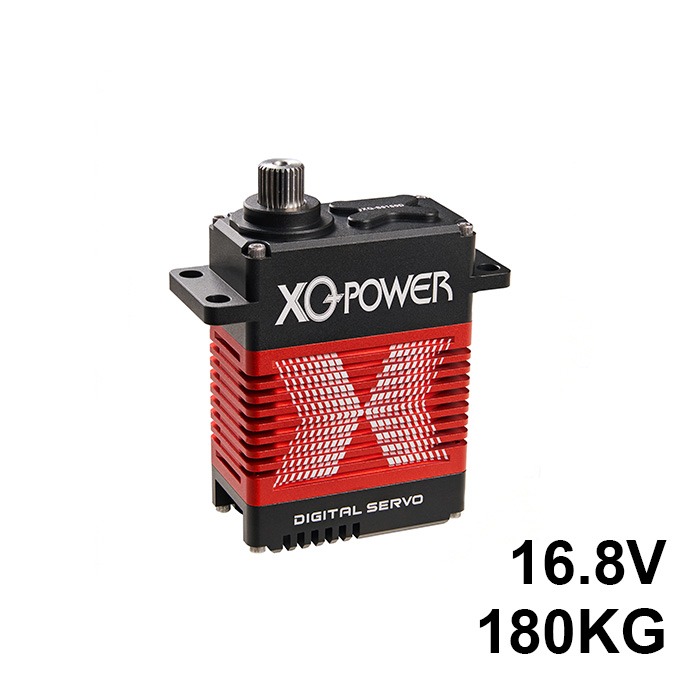
Why S9150D Redefines Power Density
When we act as a technical partner for drone or humanoid projects, we often recommend the S9150D series. It represents our best High Power Density Servo engineering. By using a brushless motor core, we remove the friction and heat of carbon brushes. This allows for a much higher power-to-weight ratio. You get the holding torque of a much larger unit in a package that fits inside a narrow wing or a slender robotic forearm. It is about maximizing every millimeter of space.
You can find more detailed specs on our compact actuator lineup or check out our recent project case studies in the Engineering Capabilities Hub on our site.