
16.8V High Torque Servo: Why Engineers are Switching to High-Voltage for Mission-Critical Apps
In professional robotics and industrial automation, there’s a recurring joke on Reddit’s r/robotics: “Buy cheap, buy twice.” Most engineers have faced the nightmare of a 100generichigh−torqueservofailinginthemiddleofa50,000 project because the internal MOSFETs couldn’t handle the heat of a prolonged stall.When we designed the S9150D (16.8V high torque servo), we weren’t just chasing the highest torque number on a spreadsheet. We were solving the “Hidden Costs” of failure.
1. The 16.8V Efficiency Advantage: It’s Not Just About Speed
Most high-torque servos run on 7.4V or 8.4V. To achieve massive torque at these lower voltages, the current (Amperage) must be incredibly high. High current equals high heat (P=I2R).
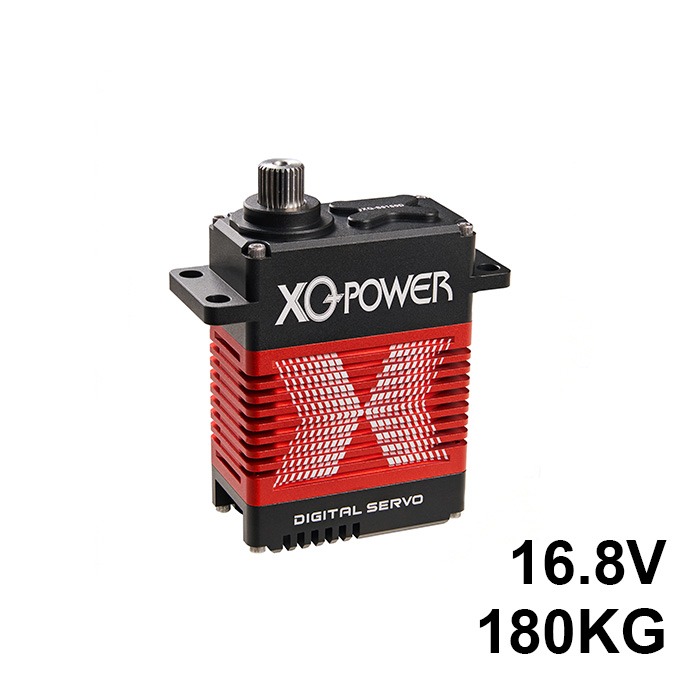
By utilizing a 16.8V High-Voltage architecture, the S9150D delivers the same power at significantly lower current levels. This reduced thermal load preserves the lifespan of the brushless motor and internal electronics. For industrial integrators, this also means you can use thinner, lighter wiring without worrying about significant voltage drops over long distances—a critical factor in large-scale UAVs or multi-axis robotic arms.
2. From Actuator to Diagnostic Tool: Real-time Telemetry
A common complaint found in engineering forums is the “Black Box” nature of traditional servos. You send a PWM signal, and you hope it reaches the position. If it doesn’t, your system has no idea until something breaks.
The S9150D changes the game by offering Digital Telemetry. It doesn’t just “move”; it communicates. The system can monitor:
- Real-time Internal Temperature: To prevent thermal runaway.
- Current Draw: To detect if a valve is partially clogged or a joint is stiffening.
- Precise Position Feedback: Using high-resolution magnetic encoders instead of wear-prone potentiometers.
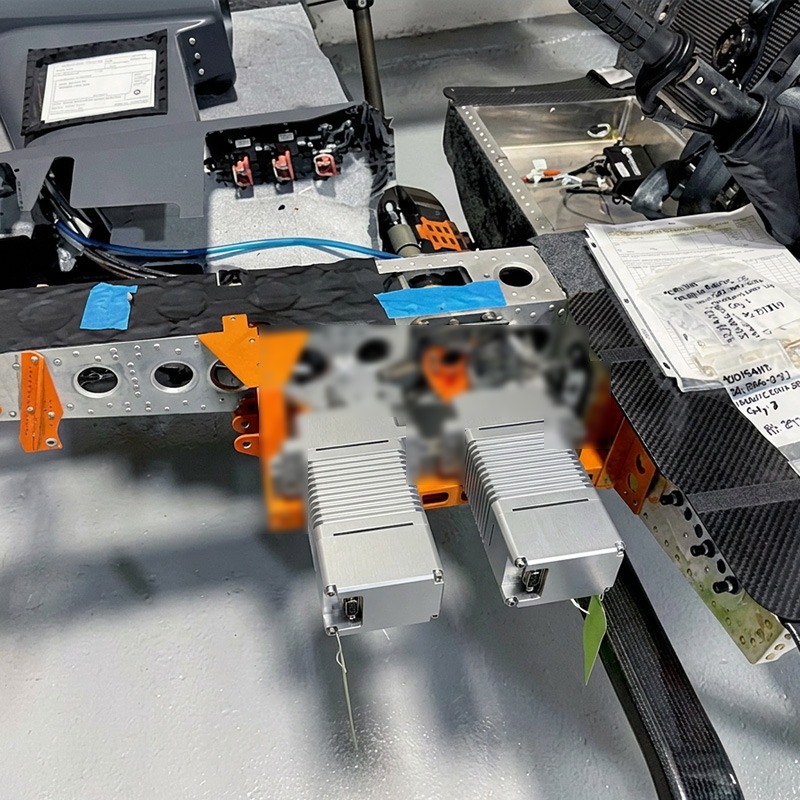
As one Redditor noted in a thread about industrial valve control: “I don’t need a servo that just pushes; I need a servo that tells me WHEN it’s struggling so I can service the valve before it leaks.”
3. Intelligent Stall Protection: Protecting Your ROI
In industrial environments, mechanical jams happen. A traditional high-torque servo will continue to pull maximum current during a stall until the motor burns out or the gears strip.
The S9150D features intelligent Stall Protection Logic. If a mechanical obstruction is detected, the internal controller adjusts the output power to prevent damage while maintaining holding torque. Once the obstruction is cleared, it resumes normal operation. This “Self-Healing” capability is what justifies the investment—you aren’t just buying a servo; you’re buying insurance for your entire machine.
4. Hardened Gear Train & Backlash Control
180kg.cm of torque is useless if the gear train has “slop” (backlash). The S9150D utilizes a specialized alloy gear set, precision-cut to minimize backlash. This ensures that in high-frequency oscillatory applications—like stabilizing a sensor gimbal on a heavy-lift UAV—the movements remain crisp and repeatable, turn after turn, for over 2,000 hours of continuous use.
[2000-Hour Continuous Lifespan Test. pdf]
Frequently Asked Questions
A: 16.8V systems allow for lower current (Amperage) to achieve the same power output. This reduces heat generation, increases efficiency, and allows for longer, thinner wiring without significant voltage drop—critical for large industrial platforms.
A: Digital telemetry allows the controller to monitor real-time data such as internal temperature, current draw, and precise position. This enables “Predictive Maintenance,” allowing operators to identify mechanical wear before a total system failure occurs.
A: The built-in controller detects when the movement is obstructed. Instead of drawing maximum current and burning the motor, it automatically scales back power to protect internal electronics while maintaining enough torque to hold the position.
A: Yes. The S9150D 16.8V high torque servo is built with a high-grade aluminum housing and O-ring seals. Combined with specialized anti-corrosion treatments, it is designed to withstand harsh offshore and industrial environments.