
Is Your AGV Shaking at Startup? It’s Not the Torque—It’s the Inertia Ratio
I was scrolling through r/AskEngineers last night and saw a thread that felt painfully familiar. A robotics student (let’s call him u/AGV_Newbie) was losing sleep because his 1-ton AGV prototype was “shaking like an earthquake” every time it tried to start moving.
He had already upgraded to a massive AGV drive wheel motor with double the required torque, but the shaking just got worse. Most of the replies were telling him to “tune the PIDs,” but one senior engineer dropped the real truth: “You can’t tune out a bad inertia match.”
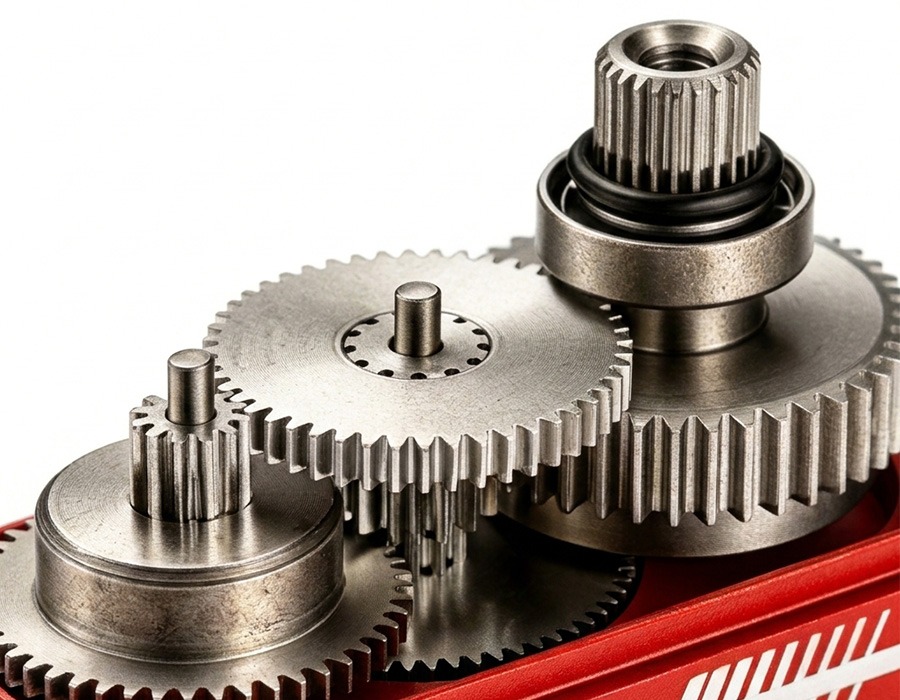
The “Strong Man on Ice” Problem
Most B2B buyers think that if a motor has enough torque to move a load, the job is done. But in the world of heavy-duty AGVs and mobile platforms, torque is only half the story.
Think of it like a world-class weightlifter trying to push a stalled freight train while standing on a sheet of ice. The lifter has the strength (Torque), but he has no traction or balance (Control). When your AGV drive wheel motor is too small in “inertia” compared to the massive load it’s pushing, the control loop becomes unstable. The motor “over-corrects,” leading to that violent shaking or the dreaded “Overcurrent” error on your driver.
The Technical Detail: Inertia Ratio (Jm vs. Jl)
If you want a smooth-running AGV, you need to look at the Inertia Ratio—the relationship between the inertia of the motor’s rotor (Jm) and the inertia of the load (Jl).
In high-precision industrial automation, we usually aim for a ratio of 1:5 or 1:10. If you’re pushing a 1000kg load with a tiny motor that has high torque but ultra-low internal inertia, your ratio might be 1:50. At that point, no amount of software tuning will save you. The motor simply doesn’t have the “physical authority” to tell the load what to do.
Why “High Torque” Can Sometimes Make it Worse
When u/AGV_Newbie swapped in a bigger motor with even more torque, he likely chose a high-speed, low-inertia model. This actually widened the inertia gap. The motor was now so powerful and “twitchy” that it reacted to every micro-vibration in the chassis, amplifying the oscillation instead of dampening it.
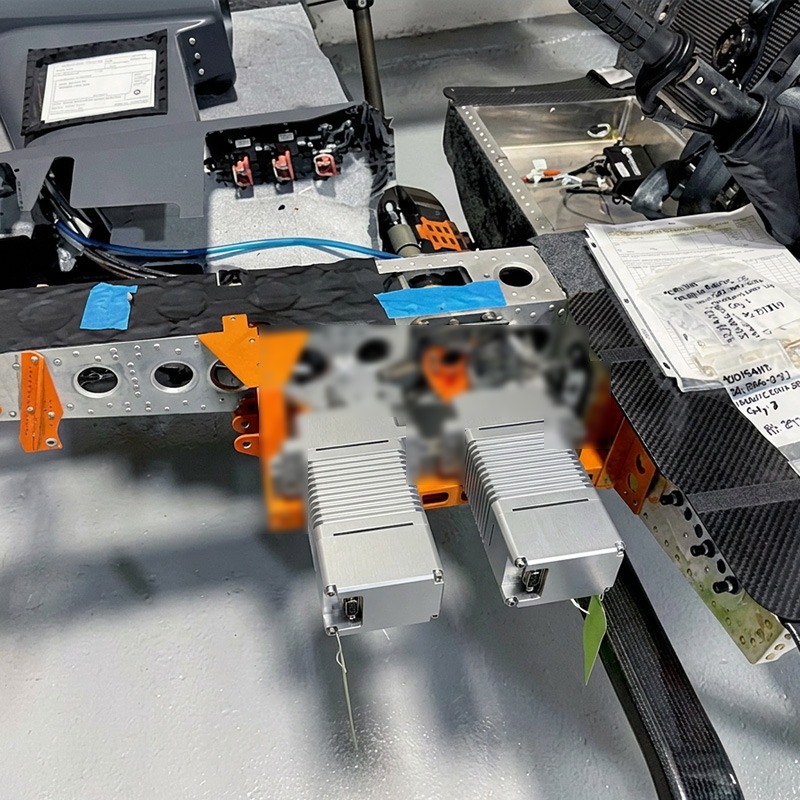
How to Fix the Shaking
If you’re in the middle of a build and the vibration is killing your project:
- Check the Gearbox: A higher gear ratio increases the “reflected inertia” to the motor, making the load feel “lighter” and easier to control.
- Look for “High-Inertia” Models: Some servos are specifically designed with heavier rotors for AGV applications. They aren’t as “fast,” but they are incredibly stable.
- Increase Drive Sampling: Use a driver that can sample the encoder at a higher frequency to catch the vibration before it builds up.
How We Handle Heavy Loads at XQ-Power
When we developed our High-Power Brushless Series for AGV drive wheel motors, we didn’t just chase raw torque. We optimized the rotor mass and paired the motors with drivers that use high-frequency position loop sampling.
We’ve had clients switch to our motors not because they needed more power, but because they needed their robots to stop vibrating across the warehouse floor. If you’re struggling with startup stability on a heavy-duty platform, don’t just buy a “bigger” motor. Check our Inertia Matching charts first—it might save you a month of useless PID tuning.
Powering Innovation
Contact XQ-power’s product specialist to recommend suitable motor or servo for your product.