
A 16.8V High Voltage Servo is the smartest choice for industrial UAV engineers who need to simplify their power systems. “Direct-drive power saved us 150g in voltage regulators alone,” noted a lead VTOL developer during our last technical review. This shift toward direct-drive systems is not just about weight. It is about removing common failure points in the electrical architecture.

Eliminating the BEC Bottleneck
Most industrial drones use 4S LiPo packs. At full charge, these sit at 16.8V. Traditionally, you would need a heavy BEC to step this down. That creates extra heat. It also adds one more component that can fail mid-air. Using a 16.8V High Voltage Servo allows a direct connection to the power rail. This removes EMI noise. It also boosts overall system reliability. For high-value missions, this simplicity is vital.
Lower Heat through Higher Voltage
There is a common myth that higher voltage means more heat. In reality, it is the opposite. This is the P=UI rule in action. To produce the same torque, a 16.8V High Voltage Servo draws less current. Lower current leads to cooler running temperatures. This is critical for long-endurance flights. Cooler motors maintain better precision. They also prevent torque drift during a two-hour mission.
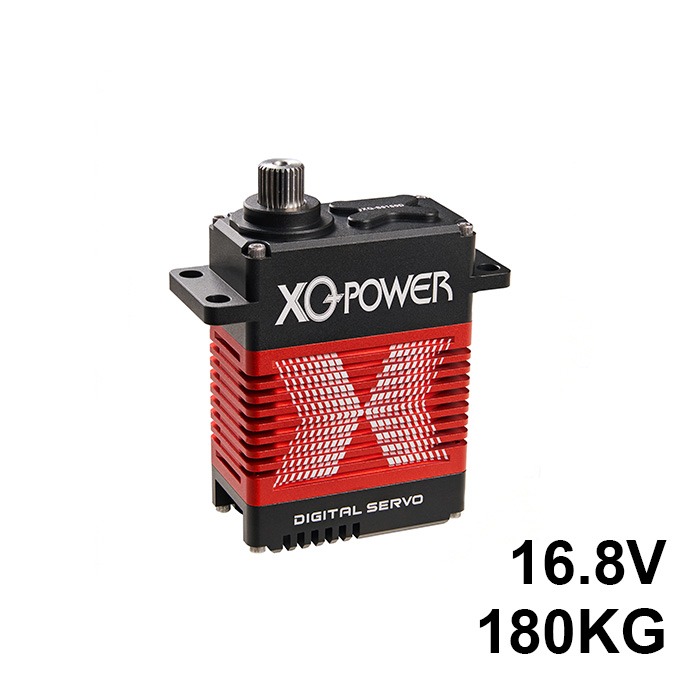
Practical Integration for UAV Missions
We often act as a technical partner on custom UAV builds. During these projects, we always emphasize decoupling. Even though our servos handle 16.8V, high-power ESCs create nasty spikes. We recommend adding a capacitor bank to the main rail. This keeps the signal clean for models like the S9150D-HV. Our team can also provide custom wiring diagrams for the S8335DW-HV series.
You can find more detailed specs on our high-voltage lineup or check out our recent project case studies in the Engineering Capabilities Hub on our site.