
When engineers transition from hobby-grade to industrial robotics, they often ask: “Should I stay with 12V or jump all the way to 310V AC?” The answer is almost always the 48V brushless servo.
In the world of high-torque motion control, 48V has become the “Golden Voltage” for three critical reasons.
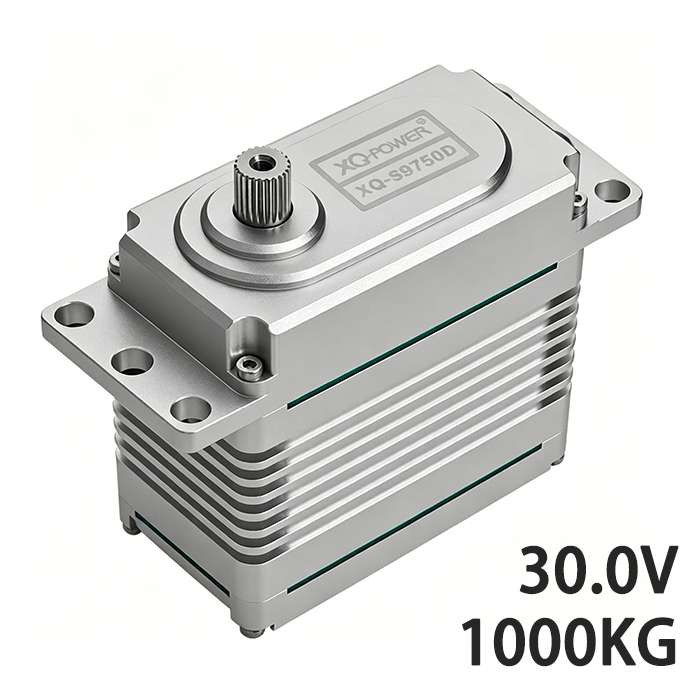
First, think about power density without the danger. 12V or 24V systems require massive current to achieve high torque. This leads to heavy cables and extreme heat loss. However, high AC voltages require strict safety shielding and specialized certifications. A 48V brushless servo provides the “oomph” needed to move 500kg or 1000kg loads while remaining below the high-voltage safety threshold (60V DC).
Second, look at battery efficiency. Most industrial AGVs and mobile platforms use 48V battery banks. By using a 48V brushless servo, you eliminate the need for inefficient step-down converters. Every percentage of efficiency you save translates to an extra hour of warehouse runtime.
Third, consider current stability. At 48V, the motor draws less current for the same wattage output compared to 24V. This reduces the risk of voltage sags that cause controller resets during sudden load spikes.
At XQ-Power, we have optimized our industrial series for the 48V platform. It is the perfect balance of safety, torque performance, and system simplicity. If you’re building a heavy-duty platform, don’t over-complicate your power rail. Go with 48V—it’s the industry standard for a reason.
Powering Innovation
Contact XQ-power’s product specialist to recommend suitable motor or servo for your product.