
UAV Dropping Mechanism: Selecting the Right Payload Release Servo
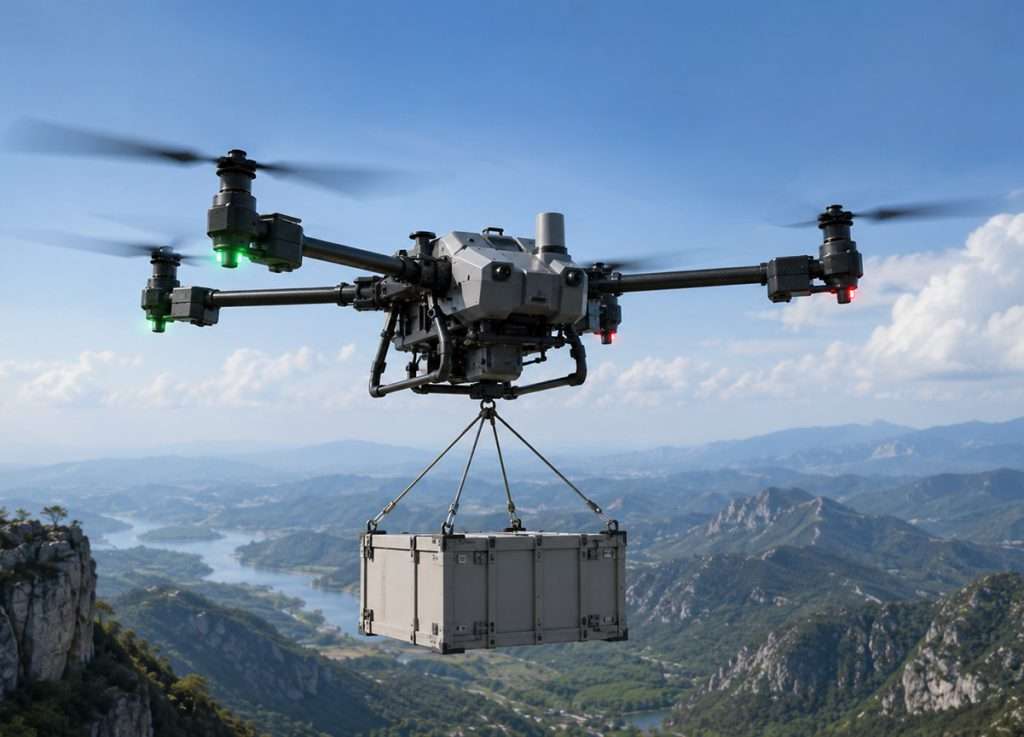
The expansion of commercial UAV applications—from last-mile medical delivery to aerial firefighting and search-and-rescue—has shifted the focus from flight stability to payload management. At the heart of every reliable UAV dropping mechanism is the servo motor: the critical component that acts as the trigger for a successful mission.
In this technical guide, we explore the engineering requirements for payload release servos and how to ensure your system performs under pressure.
1. Torque vs. Static Load: The Holding Power
When selecting a servo for a dropping mechanism, many engineers make the mistake of looking only at the “Stall Torque.” In a payload system, Static Holding Torque is equally important.
The servo must hold the weight of the cargo securely against gravity and flight vibrations without “creeping” or drawing excessive current. For a 5kg payload, a servo with at least 20kg-cm of torque is recommended to provide a safety margin for G-forces during aggressive maneuvers.
2. Speed and Precision: The “Instant Release” Factor
In emergency scenarios, such as dropping a life vest or fire-extinguishing ball, a delay of half a second can be the difference between success and failure.
- Response Time: Look for servos with high-speed Coreless or Brushless motors. These offer faster acceleration than standard motors, ensuring the mechanism clears the latch instantly.
- Resolution: High-resolution digital servos allow for precise “half-cocked” or multi-stage release sequences, which are vital for complex delivery systems.
3. Durability in Harsh Flight Environments
UAVs operate in diverse environments, from dusty construction sites to humid coastal areas.
- CNC Aluminum Housing: Essential for heat dissipation and structural rigidity. Plastic cases can flex under heavy payload tension, leading to gear misalignment.
- Metal Gear Train: Dropping heavy loads creates sudden “shock” forces on the gears. Titanium or hardened steel gears are mandatory to prevent stripped teeth during the release impact.
4. Fail-Safe Integration
A professional UAV dropping mechanism must be fail-safe.
- Signal Loss Protection: High-end digital servos can be programmed to a specific “safe” position if the control signal is lost, preventing accidental payload drops over populated areas.
- Overload Protection: XQ-Power servos include thermal and current protection to prevent the servo from burning out if the payload gets snagged or stuck.
5. Popular Applications for XQ-Power Servos
Our high-torque series (such as the XQ-S8045D) are currently integrated into:
- Medical Delivery: Releasing temperature-sensitive vaccines in remote areas.
- Forestry & Agriculture: Precision seed or fertilizer dropping.
- Public Safety: Deploying emergency supplies in disaster zones.
Conclusion
The UAV dropping mechanism is more than just a mechanical hook; it is a mission-critical subsystem. By selecting a servo that prioritizes holding torque, material strength, and digital reliability, you ensure your drone platform is ready for the demands of industrial use.
Powering Innovation
Contact XQ-power’s product specialist to recommend suitable motor or servo for your product.