
As industrial automation continues to advance, motion control systems are expected to deliver higher accuracy, better repeatability, and long-term reliability. From automated production lines to robotic equipment, precise position feedback has become a critical factor in maintaining operational efficiency.
Traditional feedback systems often rely on potentiometers, which use physical contact to detect position. While effective in many applications, these systems can experience wear over time, leading to reduced accuracy and increased maintenance requirements.
For this reason, many equipment manufacturers are turning to Magnetic Encoder Servo technology as a more reliable solution for modern industrial applications.
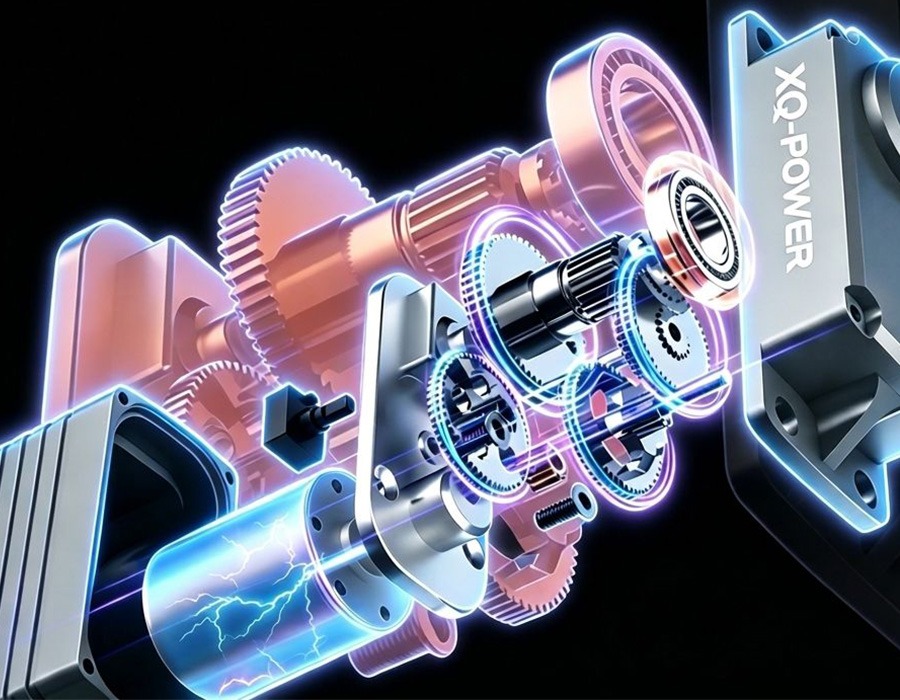
The Challenge of Long-Term Position Feedback
Industrial equipment frequently operates for extended periods under demanding conditions. Whether controlling robotic joints, sorting mechanisms, or automated packaging equipment, servo systems are required to perform thousands of repetitive movements every day.
In these environments, position feedback accuracy directly affects system performance. Even small deviations can impact product quality, operational consistency, and equipment efficiency.
As automation systems become more sophisticated, manufacturers are increasingly seeking feedback technologies that can maintain stable performance throughout the entire service life of the servo system.
Real-World Example: Automated Packaging Equipment
A common example can be found in automated packaging lines used in manufacturing facilities.
These systems rely on servo-driven mechanisms to control product positioning, pushing, sorting, and sealing operations. Because the equipment often runs continuously across multiple shifts, motion control components must maintain precise positioning over long operating periods.
With traditional contact-based feedback systems, long-term operation may gradually introduce wear-related issues that affect positioning consistency. As maintenance intervals become more frequent, production efficiency can be affected by unexpected downtime and recalibration requirements.
By adopting Magnetic Encoder Servo technology, manufacturers can benefit from non-contact position sensing that helps maintain stable feedback performance. The result is smoother motion control, improved repeatability, and reduced maintenance demands over time.
This is one reason why magnetic encoders are becoming increasingly common in modern industrial automation equipment.
Why Magnetic Encoder Technology Performs Better
Accurate Position Feedback
Magnetic encoders provide precise position information by detecting changes in a magnetic field. This enables servo systems to respond accurately to control commands and maintain consistent motion performance.
For industrial applications that require precise positioning, reliable feedback is essential for achieving stable operation.
Excellent Repeatability
Repeatability is a key requirement in automation systems where the same movement must be performed repeatedly.
Magnetic Encoder Servo systems help ensure that positioning performance remains consistent over countless operating cycles, making them suitable for applications such as automated assembly, material handling, and packaging equipment.
No Mechanical Wear
Unlike potentiometer-based feedback systems, magnetic encoders operate without physical contact between sensing elements.
This non-contact design eliminates mechanical wear associated with traditional feedback methods, helping maintain performance throughout the lifespan of the servo system.
Long-Term Reliability
Reduced wear contributes directly to improved reliability. For industrial users, this means fewer maintenance interruptions and greater confidence in continuous operation.
As factories increasingly focus on productivity and uptime, long-term reliability has become a major factor when selecting motion control components.

Applications Beyond Packaging Systems
The advantages of Magnetic Encoder Technology extend across many areas of industrial automation.
Industrial Robots
Robotic arms require accurate position feedback to achieve smooth and repeatable motion during assembly, inspection, and handling operations.
Automated Production Equipment
Production machinery relies on consistent servo performance to maintain product quality and manufacturing efficiency.
AGV and Mobile Robots
Autonomous mobile platforms depend on precise motion control for steering, navigation, and positioning tasks.
Smart Manufacturing Systems
As factories become more connected and data-driven, reliable feedback systems play an increasingly important role in supporting intelligent automation.
Why Manufacturers Are Choosing Magnetic Encoder Servos
Industrial automation continues to push the limits of precision and reliability. As a result, manufacturers are moving toward feedback technologies that can deliver stable performance over extended operating periods.
Magnetic Encoder Servo systems offer several important advantages:
- Precise position feedback
- Excellent repeatability
- Non-contact operation
- Reduced maintenance requirements
- Long-term reliability
These benefits make magnetic encoder technology an increasingly attractive choice for modern automation equipment.
Conclusion
As industrial systems demand greater accuracy and longer service life, Magnetic Encoder Technology is becoming an essential component of advanced motion control solutions.
By providing precise position feedback, excellent repeatability, and wear-free operation, Magnetic Encoder Servo systems help manufacturers improve reliability while reducing maintenance costs. For today’s automated equipment, magnetic encoders represent a practical and future-ready approach to motion control.
https://www.isa.org?utm_source=chatgpt.com
Home