
Why Your AGV Stalls on a 3-Degree Incline: The Hidden Trap of Stall Torque
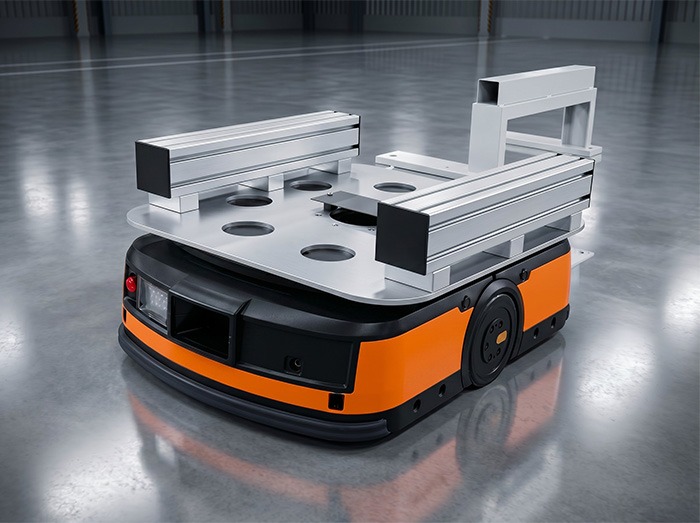
If you’ve spent any time on r/Robotics or engineering forums, you’ve likely seen this classic SOS: “My AGV performs perfectly on a flat floor, but the moment it hits a 3-degree loading ramp, the drive motor stalls or the controller trips an over-current error. I’m already using a motor rated for 150kg.cm. What am I missing?”
Most engineers look at the Peak Torque or Stall Torque rating on a datasheet and assume that’s a constant value they can rely on. Spoiler alert: It’s not.
In the world of industrial AGVs and AMRs, “Stall Torque” is often the most misunderstood (and misrepresented) spec in the book. Let’s talk about why your AGV is failing and how to actually fix your drive logic.
1. The “Cold Start” vs. “Thermal Limit” Reality
When your AGV hits an incline, it’s not just a constant load; it’s a sudden demand for torque at near-zero RPM. This is the Stall Zone.
The problem? Most motors can only hit their rated Stall Torque for a few seconds before the heat buildup in the windings becomes catastrophic. If your AGV is heavy and the ramp is long, your motor isn’t just “stalling”—it’s essentially acting as a heater.agv drive problem
At XQ Power, we’ve tested countless high-torque servos in AGV drive wheel applications. We found that many “budget” motors lose up to 30% of their effective torque within the first 15 seconds of a high-load climb because the magnets lose efficiency as they heat up.
2. The Back-EMF Trap: Why “Faster” Isn’t Always Better
Engineers often select a motor with a high KV (RPM per volt) to get more speed. But here’s the trade-off: Back-EMF.
When you’re trying to push an AGV up a slope at low speed, you need high current. If your motor is wound for high speed (high KV), it will require significantly more current to produce the same torque compared to a motor wound for torque density.
Pro Tip: If your drive controller is tripping “Over-current” on inclines, stop looking for a bigger battery. Look for a motor with Higher Power Density and a lower internal resistance (DCR).
3. Real-World Case: The “Reddit Solution” That Actually Works
I saw a discussion recently where a team was struggling with an AGV for a warehouse project. They were using a standard 12V system. Every time the AGV carried a 500kg load, the drive wheel would “stutter” on transitions between floor surfaces.
The fix wasn’t a bigger motor. It was switching to a High-Voltage (16.8V or 30V) system with a servo designed for sustained high-torque output. By increasing the voltage, they reduced the current draw required for the same power output, which kept the heat low and the stall torque consistent.
4. How to Select a Motor That Won’t Fail on the Ramp
Next time you’re looking at a datasheet for an AGV drive motor, ask the manufacturer these three questions:
- What is the Continuous Stall Torque? (Not just the peak value for 1 second).
- What is the Thermal Time Constant? How long can it hold 80% of its max torque before it needs to de-rate?
- Is the Gearbox Efficiency Included? If you have a 100:1 gearbox that’s only 60% efficient, your “180kg.cm motor” is actually a 108kg.cm motor at the wheel.
The XQ Power Advantage
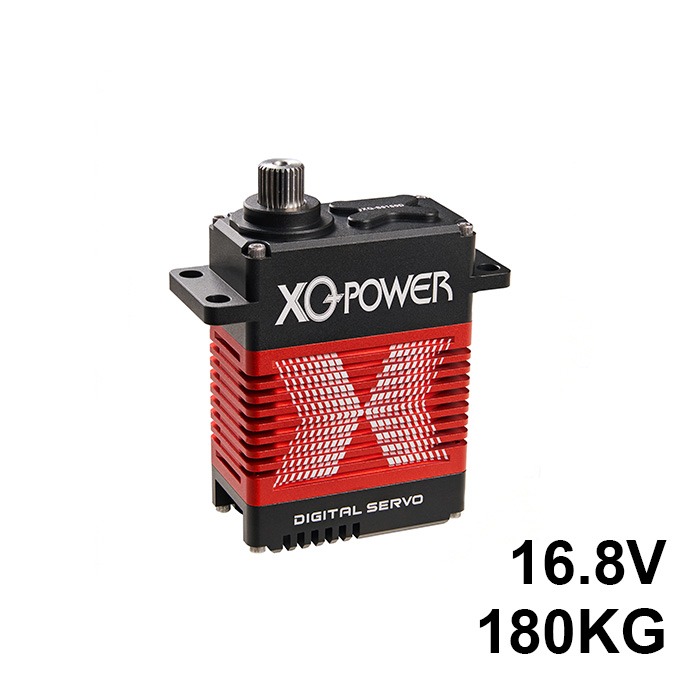
We don’t just sell motors; we build actuators for systems that cannot afford to fail. Our S9150D and 30V Series are specifically engineered with heat-dissipating CNC housings and high-density windings. We provide the real-world curves so your AGV doesn’t just work on the flat—it conquers the ramp.agv drive problem