
As cargo drones, Heavy Lift UAV industrial UAVs, and VTOL aircraft continue to grow in size and capability, the demands placed on flight control systems are increasing rapidly. While propulsion systems often receive the most attention during aircraft development, experienced UAV engineers understand that flight safety depends just as heavily on the reliability of the actuation system Heavy Lift UAV Servo.
A heavy lift UAV servo is responsible for converting flight controller commands into precise mechanical movement. Whether controlling an elevator, rudder, flap, or tilt mechanism, servo performance directly affects aircraft stability, maneuverability, and operational safety.
For heavy-lift UAV platforms carrying valuable payloads, servo selection should be based on much more than torque specifications alone.
The continued growth of commercial UAV operations has increased industry focus on safety, certification, and reliability. Engineers can refer to FAA Unmanned Aircraft Systems resources for additional operational guidance.
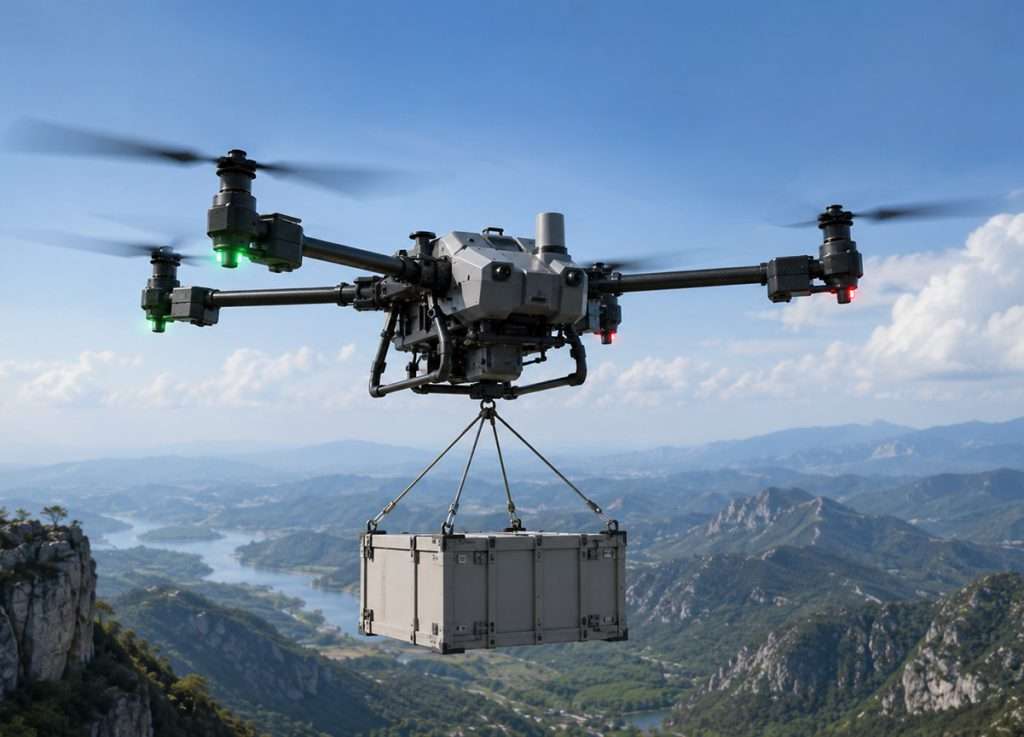
Why Heavy-Lift UAVs Require More Advanced Servo Systems
Small consumer drones primarily rely on motor speed adjustments for control. In contrast, many industrial UAVs and fixed-wing platforms depend on servos to operate critical control surfaces.
As aircraft size increases, so do aerodynamic forces acting on those surfaces. Higher airspeeds, larger control surfaces, and heavier payloads all create additional loads that servos must overcome.
Typical servo requirements vary significantly:
| UAV Platform | Typical Servo Requirement |
|---|---|
| Mapping UAV | 3–8 kg·cm |
| Industrial Inspection UAV | 15–30 kg·cm |
| VTOL UAV | 20–50 kg·cm |
| Heavy Lift Cargo UAV | 50 kg·cm and above |
When a servo lacks sufficient torque margin, the control surface may fail to reach its commanded position under load. This can result in sluggish response, reduced flight stability, and increased workload for the flight controller.
For this reason, many UAV designers select servos with at least 30% additional torque capacity beyond calculated operating requirements.
Flight Safety Depends on Position Accuracy
Torque is only one part of the equation.
A servo may have sufficient power, but if it cannot consistently reach and maintain the desired position, flight performance can suffer.
Modern flight controllers assume that a commanded control surface position is accurately achieved. When actual movement differs from the commanded position, the controller continuously attempts to compensate.
This can create several issues:
- Oscillation during flight
- Reduced control precision
- Increased power consumption
- Degraded autonomous flight performance
- Lower stability in turbulent conditions
Position accuracy becomes particularly important during:
- Autonomous waypoint missions
- Precision agricultural operations
- Long-range inspection flights
- VTOL transition sequences
- Cargo delivery operations
In these applications, even small positioning errors can accumulate and negatively affect aircraft behavior.
The Advantages of Magnetic Encoder Technology
Traditional servos often use potentiometers to provide position feedback.
While potentiometers are widely used and cost-effective, they rely on physical contact between moving components. Over time, mechanical wear can affect feedback accuracy and repeatability.
Magnetic encoder technology offers several advantages for industrial UAV applications.
Non-Contact Position Sensing
Because magnetic encoders do not rely on physical contact, there is no friction-based wear during operation.
This improves long-term reliability and helps maintain consistent positioning performance throughout the service life of the servo.
Improved Repeatability
Precise and repeatable position feedback enables smoother control surface movement and more predictable aircraft behavior.
This is particularly valuable for autonomous UAV operations where consistency is critical.
Better Resistance to Vibration
Heavy lift UAVs generate continuous vibration during flight.
Magnetic encoders generally tolerate vibration better than mechanical contact-based feedback systems, making them well suited for demanding aerial environments.
Enhanced Long-Term Stability
For commercial UAV fleets operating hundreds or thousands of flight hours annually, stable position feedback can contribute significantly to reducing maintenance requirements and improving operational reliability.
Critical Servo Applications in Heavy-Lift UAVs
Servos are used throughout modern UAV platforms and often perform mission-critical functions.
Elevator Control
The elevator controls aircraft pitch and plays a major role in altitude management and flight stability.
Servo inaccuracies in elevator control can lead to unstable pitch behavior and inefficient flight performance.
Rudder Control
The rudder manages yaw movement and directional stability.
In crosswind conditions, reliable rudder actuation becomes essential for maintaining accurate flight paths.
Flap Systems
Many cargo UAVs and long-endurance aircraft utilize flaps to improve takeoff and landing performance.
These systems require precise servo positioning to ensure predictable aerodynamic behavior.
VTOL Transition Mechanisms
VTOL aircraft represent one of the most demanding applications for servo systems.
Servos may be responsible for:
- Tilt rotor positioning
- Tilt wing movement
- Locking mechanisms
- Transition control systems
Failure during transition between hover and forward flight can have serious consequences, making reliability and positional accuracy extremely important.
Payload Release Systems
Logistics and cargo delivery UAVs often incorporate servo-operated payload release mechanisms.
Reliable actuation ensures that payload deployment occurs safely and accurately when required.
Environmental Challenges Facing UAV Servo Systems
Real-world operating environments introduce challenges that are often overlooked during initial design stages.
Continuous Vibration
Propeller-generated vibration is present throughout every flight.
Over time, vibration can accelerate wear on gears, bearings, connectors, and feedback systems.
Dust and Moisture
Industrial UAVs frequently operate in agricultural, mining, construction, and utility inspection environments.
Ingress protection and corrosion resistance become important factors in maintaining long-term reliability.
Temperature Extremes
Aircraft may experience significant temperature variations between ground level and operational altitude.
Servo components must maintain consistent performance despite changing environmental conditions.
Shock Loads
Hard landings, transportation, and emergency maneuvers can expose servos to sudden mechanical shocks.
Robust gear systems and durable mechanical construction help improve survivability in these situations.
Case Study: Improving Reliability in a Cargo UAV Platform
Consider a cargo UAV operating multiple delivery missions each day.
After extended service, engineers observed increasing control surface deviations during flight. Investigation revealed that position feedback accuracy had gradually degraded, causing the flight controller to make frequent corrective adjustments.
Although the aircraft remained flyable, flight efficiency and stability were affected.
Following replacement with a higher-precision feedback solution utilizing magnetic encoder technology, position consistency improved significantly. Flight controller corrections were reduced, resulting in smoother operation and more predictable flight behavior.
This example highlights an important engineering principle: reliable position feedback is often just as important as torque output.
Key Factors When Selecting a Heavy Lift UAV Servo
When evaluating servo systems for industrial UAV applications, engineers should consider the following criteria:
Torque Margin
Maintain sufficient reserve torque to handle aerodynamic loads and unexpected operating conditions.
Position Accuracy
Evaluate encoder technology, resolution, repeatability, and feedback consistency.
Gear Strength
Metal gears are generally preferred for high-load UAV applications due to their durability and wear resistance.
Communication Interface
Consider compatibility with the aircraft control architecture.
Common interfaces include:
- PWM
- CAN Bus
- RS485
- Serial communication protocols
Environmental Protection
Assess resistance to vibration, dust, moisture, and temperature fluctuations.
Reliability Testing
Review cycle-life testing, vibration testing, and environmental qualification data whenever available.
Conclusion
As UAV platforms continue to evolve toward larger payload capacities and more demanding missions, servo systems play an increasingly important role in ensuring flight safety and operational reliability.
Selecting the right heavy lift UAV servo involves more than choosing the highest torque rating. Position accuracy, feedback technology, environmental durability, and long-term reliability are equally important factors.
For modern cargo drones, VTOL aircraft, and industrial UAVs, magnetic encoder technology is becoming an increasingly valuable solution for achieving the precise and consistent control required by advanced flight systems.
Powering Innovation
Contact XQ-power’s product specialist to recommend suitable motor or servo for your product.