
Underwater Servo Hydrostatic Pressure — What Depth Demands
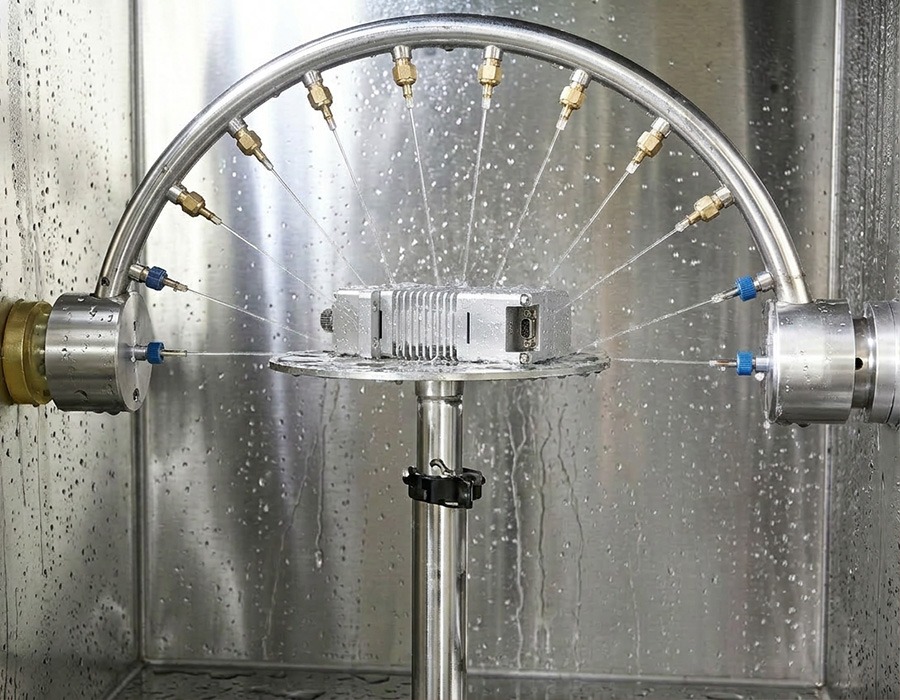
Underwater servo hydrostatic pressure is the challenge no terrestrial actuator ever faces. The math runs simple: every 10 meters of depth adds roughly 1 bar of pressure on every surface. At 100 meters, 10 bar squeezes your servo from all directions. An IP68 rating — which most manufacturers test at 1-2 meters for 30 minutes — means absolutely nothing at real operating depth.
Why Standard Seals Crush at Depth
A conventional servo housing relies on lip seals and O-rings that keep water out at atmospheric pressure. Push external pressure higher and those seals deform. The lip seal on the output shaft actually compresses tighter against the shaft under pressure. That sounds like a good thing until the increased friction cooks the seal and the shaft surface together, and the seal lip wears through in hours instead of years.
O-rings in static joints handle pressure better because compression squeezes them tighter into the groove. But this only works when the groove dimensions match the pressure level. A standard O-ring groove cut for low pressure will extrude the O-ring right into the gap at high pressure. The fix: backup rings and tighter groove clearances. These details separate a genuine underwater servo from a regular servo wearing an IP sticker.
Oil-Filled Housings — The Real Solution
Deep-water servo operation demands an oil-filled housing with a pressure compensator. You fill the housing with dielectric oil, then add a flexible bladder or piston that lets the oil volume shift as external pressure rises. Internal pressure tracks external pressure, so no differential pressure tries to force water past the seals. The seals only need to contain oil and block water at near-zero differential.
The oil pulls double duty as lubrication and cooling for the gears and motor. A sealed air-filled housing at depth compresses the air to a fraction of its surface volume, starving the motor of cooling surface area. An oil-filled housing conducts heat straight to the housing walls. Heat dissipation actually improves underwater compared to air.
Motor and Electronics — What Survives
Brushless motors run fine in oil. The windings carry insulation and the oil does not conduct electricity. The magnets need epoxy coating to block oil penetration between the magnet and rotor surface, but that is a solved problem. Brushed motors fail in oil because the oil strips away the brush contact film, and the brushes arc and burn out fast.
The electronics — driver board, encoder, feedback sensors — cannot sit in oil without conformal coating on the PCB and potting on every connector. Most underwater servo designs isolate the electronics in a separate dry compartment inside a pressure housing, then connect to the motor through glass-sealed feedthrough pins. This adds cost, but it remains the only reliable defense against salt water reaching sensitive circuits.
Depth Rating — Demand the Test Report
A servo that claims a “300 meter depth rating” without naming the test standard is selling marketing, not engineering. ISO 6425 comes from dive watches, not servos. The relevant test runs the servo under load inside a hyperbaric chamber at the rated depth, not just sitting there unpowered. Ask for the test report. If the supplier cannot produce one, treat that depth rating as a guess.
For most industrial underwater work — inspection ROVs, aquaculture net cleaners, dam gate actuators — a properly oil-filled servo with a pressure compensator runs reliably at 100-200 meters. Go deeper and you enter specialized subsea actuator territory, where costs jump by an order of magnitude.1