
A Stall Torque Motor setup is often misunderstood by engineers who focus only on raw power numbers. “We kept losing actuators on our clamping robot because we didn’t respect the thermal window,” an automation lead told us last week. This is a classic mistake in industrial design. Stall torque is a vital performance metric, but it is not a continuous operating state.
The Trap of Static Holding
When a Stall Torque Motor stops spinning but remains under load, it draws maximum current. This energy does not turn into motion. Instead, it turns into pure heat. In a matter of seconds, the internal coil insulation can melt. This is especially true in compact robotic joints where airflow is zero. If your application requires holding a position against a heavy load, you cannot rely on raw torque alone. You need a strategy to manage that electrical stress.
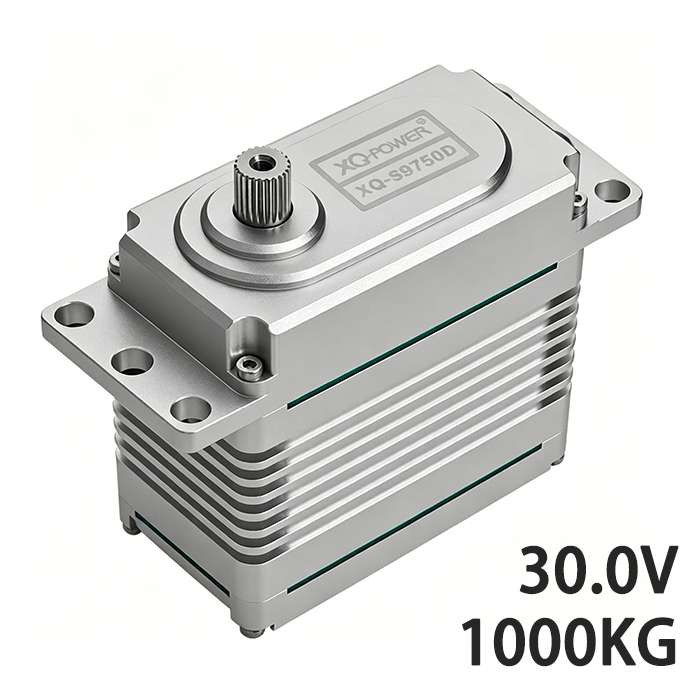
Smart Current Limiting in S9750 Units
We solved this issue in our S9750 series by implementing active current sensing. Unlike a standard Stall Torque Motor that burns until it fails, our smart firmware monitors the internal shunt. If it detects a stall condition for more than a few seconds, it automatically throttles the duty cycle. This keeps the holding force high enough to secure the load. However, it drops the current low enough to prevent a meltdown. It is the difference between a successful mission and a costly hardware replacement.
Thermal Monitoring and System Feedback
As your technical partner, we always recommend using the feedback loop provided by the RS485 protocol. A high-quality Stall Torque Motor should tell you its temperature in real-time. In a recent project with an AGV manufacturer, we configured the S8335DW to trigger a system alert when the internal thermistor hit 75 degrees Celsius. This allowed the controller to back off the load before any damage occurred. This level of intelligence turns a “dumb” motor into a reliable industrial component.
You can find more detailed specs on our high-torque lineup or check out our recent project case studies in the Engineering Capabilities Hub on our site.