
The Engineering Truth About Stall Torque: Why Most Ratings Are Only Half the Story
If you’re scouring the web for a “stall torque motor” or a heavy-duty servo, you’ve likely seen some impressive numbers: 100kg.cm, 500kg.cm, even 1000kg.cm. But in the field, numbers on a sticker don’t hold up your load—physics does.
The biggest mistake we see in B2B procurement is treating “Stall Torque” as a constant, usable power metric. It isn’t. If you design your system based on the peak stall rating without understanding the variables, your actuator is going to fail.
Here is what your servo manufacturer might not be telling you about stall torque.
1. Peak vs. Continuous: The 5-Second Rule
In most datasheets, “Stall Torque” refers to the absolute maximum torque the servo can produce before the internal motor physically stops.
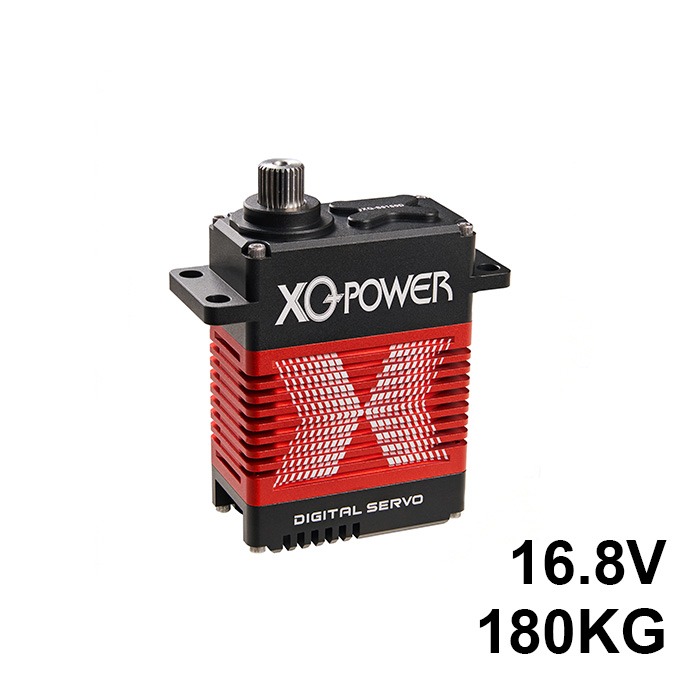
The Trap: You cannot run a servo at its stall torque for more than a few seconds. At stall, efficiency is 0%, and 100% of the electrical energy is being converted into heat. The XQ Power Standard: We advise our clients to design for a continuous load of no more than 20-30% of the rated stall torque. If you need to hold 50kg.cm indefinitely, don’t buy a 50kg.cm servo—buy our 180kg.cm S9150D. Give yourself a safety margin, or prepare for thermal shutdown.
2. The Voltage Factor: Torque is Not Static
Stall torque is directly proportional to voltage. If a motor is rated for “100kg.cm at 16.8V,” but your battery drops to 14V under load, you no longer have a 100kg.cm servo.
This is why we focus heavily on High-Voltage (30V) systems. By increasing the voltage, we can deliver massive torque while keeping the current (Amps) lower, which significantly reduces the heat generated in the windings.
3. Gear Geometry and “Back-Driving”
A “High Torque” rating is useless if the gears shear off the moment the load hits. Many “stall torque motors” use cheap brass or low-grade aluminum gears.
For our 1000kg industrial series, we use hardened steel gearsets with specific tooth geometries to prevent “back-driving” and stripping. When your system stalls, the mechanical strength of the gear teeth is the only thing standing between a controlled stop and a catastrophic drop.
4. How We Measure It (The “Human” Side of Quality)
We don’t just use a static dyno. We perform sustained stall testing. We lock the output shaft and monitor the temperature rise over time. We want to know exactly at what second the MOSFETs on the control board will trigger a thermal cut-off.
This transparency is why engineers choose XQ Power. We give you the “real” numbers, not just the “marketing” numbers.
Summary for Engineers
When selecting your next stall torque motor or integrated servo:
- Ask for the Thermal Derating Curve.
- Verify the Gear Material (Steel is mandatory for high torque).
- Always over-spec your torque by at least 3x for industrial reliability.