
I was scrolling through r/ROV and saw a guy venting about a “waterproof” servo that leaked at only 2 meters depth. His comment was: “IP67 is just a sticker until it actually hits the water.” He’s right. In the industrial world, a “splash-proof” rating is useless for a subsea mission. That is why we don’t just claim IP67/IP68; we prove it. I want to take you inside our latest waterproof servo test report for the XQ-S9150D series.
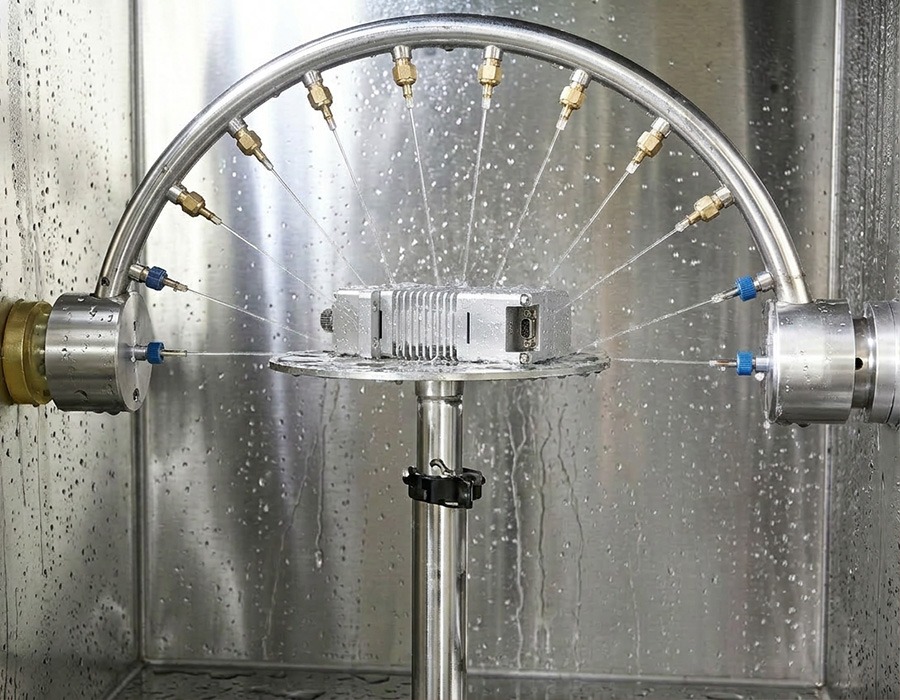
The Pressure Chamber Reality
Most “waterproof” servos are tested by sitting in a bucket of water. We think that’s amateur. For the XQ-S9150D, our lab report shows we use a specialized pressure chamber to simulate depth. We look for two things:
- Static Sealing: Can the O-rings hold against the PSI of 10 meters depth?
- Dynamic Sealing: This is where most fail. When the shaft is spinning at 0.14s/60°, does it create a vacuum that “sucks” water in? Our test report confirms zero ingress even during high-speed actuation under pressure.
Saltwater vs. Freshwater
If your robot works in the ocean, freshwater tests mean nothing. Our waterproof servo test report includes an accelerated salt-spray test. We watch for electrolysis and housing pitting. By using a full CNC-machined 7075 aluminum case with a specialized hard-anodized coating, the S9150D resists the “eating” effect of the ocean.
Why Certification Matters for B2B
When you are building a $100k underwater crawler, you need a paper trail. Our lab reports aren’t just for marketing; they are for your compliance files. If you need a copy of the XQPOWER SERVO IP67/IP68 Laboratory Report, it’s available for download on our product page.
Stop buying “stickers” and start buying certified reliability.
Powering Innovation
Contact XQ-power’s product specialist to recommend suitable motor or servo for your product.