
LiPo Servo Battery Guide — Sag, C-Rating, Runtime
Any LiPo servo battery guide worth reading starts by telling you what most datasheets skip: not all 4S packs do the same job, and your 16.8V industrial servo knows the difference. I have watched engineers blame perfectly good servos for “low torque” or “jitter” when the battery was the real culprit. The first rule is simple — your pack needs voltage headroom.
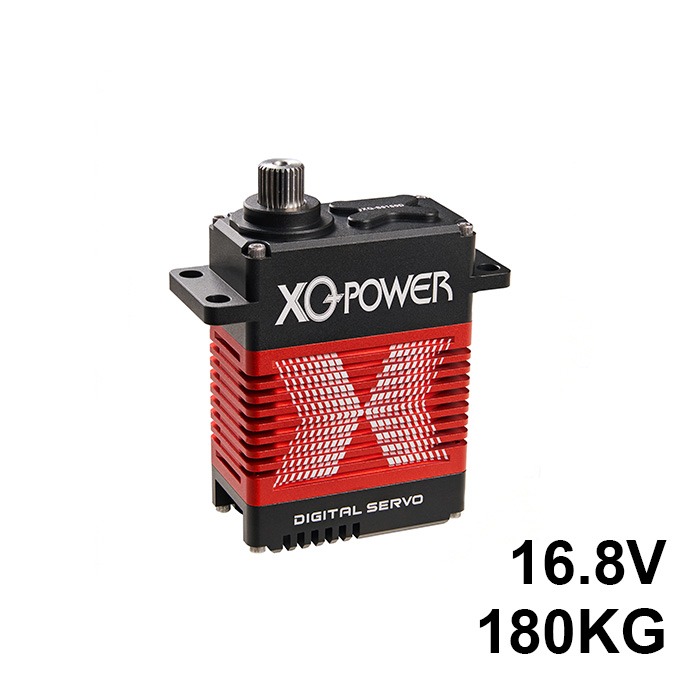
Why Voltage Sag Kills Your Torque
A fully charged 4S LiPo sits at 16.8V, matching what most industrial high-voltage servos ask for. The problem shows up the moment your servo pulls current and that voltage drops. Feed the servo 14V instead of 16.8V during a hard pull and you have already lost 20-30% of your rated torque. You just will not see it on the bench.
Cold weather makes this worse. LiPo internal resistance climbs as the temperature drops, so a pack that delivers clean power at 25C might sag badly at 5C. If your AGV steering servo runs outdoors in winter, pick a pack with at least 30% more burst C-rating than your calculated draw. Otherwise, the first cold morning of the season turns into a service call.
C-Rating and What You Actually Need
C-rating math looks simple: capacity times C-rate equals continuous current. A 5000mAh pack at 30C can theoretically push 150A. In practice, those consumer-pack numbers run 30-50% optimistic. For an industrial servo pulling 10-15A peak, a genuine 25-30C 5000mAh pack does the job. Do not waste money chasing “100C” labels.
Burst rating matters more than continuous for servo loads. The current draw is pulsed, not steady. A pack that handles 50C burst for 3 seconds shrugs off torque spikes. The thing that kills servos is sustained sag — several seconds of stall pulling the voltage low enough that the BEC or internal electronics brown out and reset.
Runtime vs Weight — Pick Your Trade-Off
More mAh means more runtime and more weight. For a fixed installation where weight costs you nothing, go big — 8000-10000mAh runs through a full shift. Mobile platforms like AGVs need a different calculation. Figure your average draw, then size the pack for 1.5x your expected runtime. A servo pulling 5A on a 5000mAh pack gives you about an hour, assuming no other loads share that battery.
One Pack or Two
Sharing a battery with motors or ESCs invites noise problems. Every time a motor brakes or reverses, it dumps spikes onto the power rail. Your servo microcontroller reads those spikes as a brownout and resets. The cleanest solution: run the servo on its own dedicated 4S pack, or feed it through a BEC from the main battery. The extra weight of a small RX pack costs you nothing compared to a random shutdown in the field. That is the real takeaway from any practical LiPo servo battery guide — a servo is only as reliable as the power you feed it.