
Servo vs Stepper Motor: Stop Overthinking It
Every automation project hits the same question at some point: servo or stepper? The internet will give you a hundred comparison tables. Here’s what actually matters if you’re building something that needs to work.
The one difference that changes everything is feedback. Steppers assume they moved. Servos confirm they moved. A stepper motor is open-loop — it takes step pulses and trusts the shaft followed along. Most of the time it does. When it doesn’t, because the load spiked or something jammed, the controller has no idea. It just keeps pulsing to a position the shaft never reached.
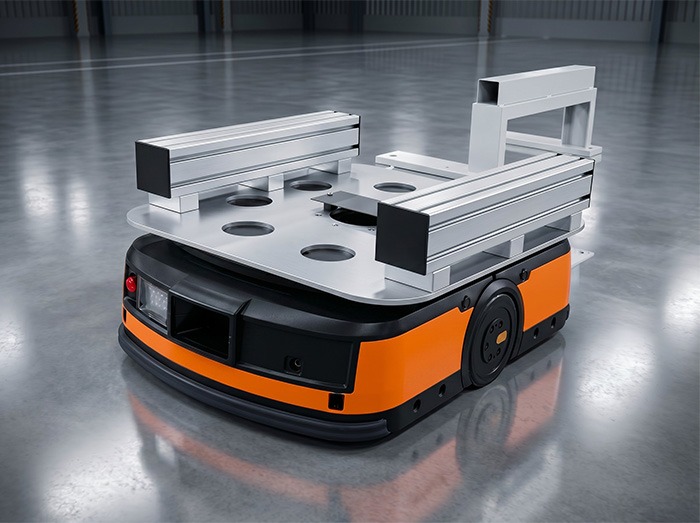
A servo has an encoder that reports actual shaft position back to the drive, correcting errors in real time. For an AGV steering system, that’s the difference between docking correctly and drifting 5 degrees off target by the end of a shift. You can’t afford to find out the hard way.
Stepper torque drops off a cliff after about 1,000 RPM. Servo torque stays relatively flat. If your application runs mostly at low speed with predictable loads, a stepper is fine. If it needs to move fast between stations — pick-and-place, indexing conveyors — the servo wins decisively.servo vs stepper motor
Steppers also pull full current just sitting there holding position. Servos throttle back to near zero when stationary. On a machine running 24/7, the power savings cover the servo price difference in under a year.
Steppers still have their place. Light loads, low speed, no consequence for missing a step — a stepper does that cheaper. But once you cross roughly 5 kg payload, 500 RPM, or any application where a position error equals downtime or damaged product, the math flips entirely.
Stepper: good enough when nothing goes wrong. Servo: more upfront, but you stop worrying about what happens when something does.
If you’re trying to spec a servo for a specific application, our engineering team does free load profiling — contact us at XQ-Power.