
Effective 16.8V servo thermal management is the secret to why the S9150D outlasts 8.4V altSelecting a high resolution magnetic encoder servo is no longer a luxury for industrial engineers; it is a necessity for long-term uptime. If you have ever managed a robotic assembly line, you know the frustration of “servo jitter.” This common hardware failure usually occurs when a traditional potentiometer-based servo develops dead spots after six months of constant use.
As one experienced builder on r/Robotics noted: “I don’t care how strong the motor is. If the feedback sensor skips, the whole machine is trash.”
The Problem with Physical Contact
Traditional servos rely on a physical “wiper” that rubs against a resistive strip to determine position. Consequently, millions of cycles inevitably lead to mechanical wear and signal degradation. This friction causes “calibration drift,” where the robot slowly loses its zero-point, requiring manual intervention and costly downtime.
How Magnetic Encoders Solve the Wear Issue
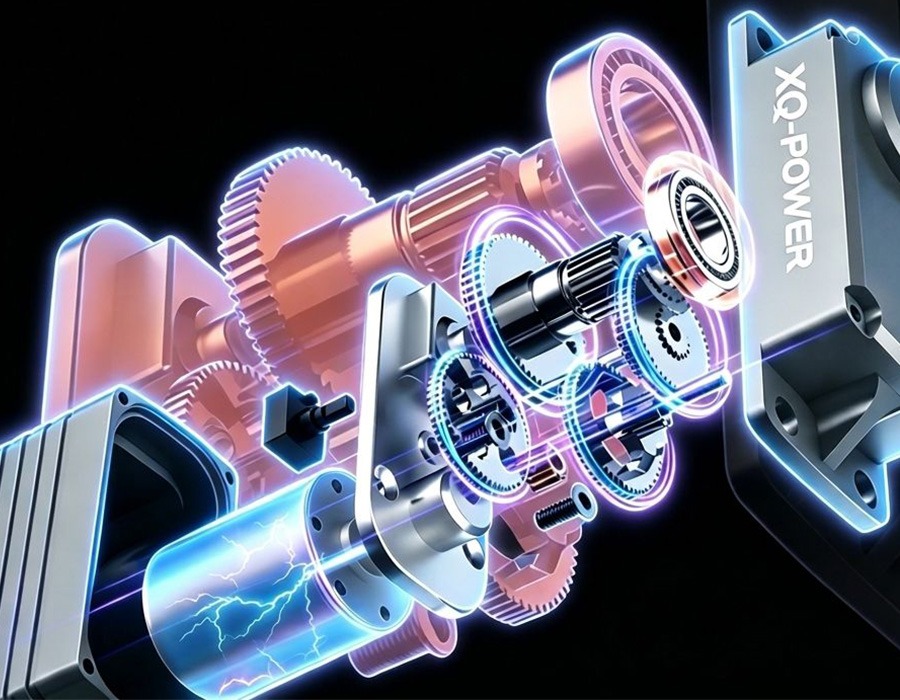
In contrast, a high resolution magnetic encoder servo utilizes a non-contact Hall-effect sensor. The internal logic detects magnetic field changes rather than physical resistance. Therefore, XQ-Power eliminated the primary cause of servo failure: friction.
Specifically, the S9150D offers three distinct advantages over analog alternatives:
- Infinite Feedback Lifespan: Because no parts touch during position sensing, the feedback system outlasts the mechanical gears.
- Enhanced Signal Integrity: Magnetic sensors are immune to the dust and carbon buildup that often plagues open-style potentiometers.
- Superior PID Precision: These sensors provide significantly higher resolution. Consequently, your controller can execute smoother motion profiles with minimal oscillation.
Why B2B Integrators are Switching
Furthermore, the S9150D combines this precision with 17.6 N.m of holding power. This ensures that your equipment stays exactly where you command it, even under massive external pressure. While hobbyists might tolerate the occasional jitter of a cheap servo, industrial integrators cannot afford the risk.
The Bottom Line
Ultimately, the transition to a high resolution magnetic encoder servo represents a shift from “reactive maintenance” to “set-and-forget” reliability. By choosing the S9150D, you are investing in a system that maintains its precision for years, not months.
16.8V servo thermal management Discover the engineering behind our high-performance actuators in our Technical Guide.